

AI News August 2026: Every Major Release, Ranked and Explained
August 2026 delivered the most concentrated month of frontier AI releases in history — and then accelerated. The first half brought Alibaba’s open-weight Qwen 3.8-Max, OpenAI’s Astra cracking 10 decade-old math problems for $2,000, Moonshot’s 2.8T Kimi K3 and WeatherNext’s Hurricane Melissa forecast; the second wave (10–15 August) shipped Grok 4.6, Gemini 3.7 Flash, GLM-5.3, DeepSeek V4 Pro 0813, OpenAI’s 14× Ultrafast tier, and the Qwen 3.8 open weights actually landing on Hugging Face. Beyond the flagships: agentic harnesses (LongHorizon, DeepSeek Harness, NVIDIA Switchyard), embodied robotics (Xiaomi XR-1, Dyna-2’s 1-million-hour world-action model), 3D worlds (Hunyuan3D-WorldClaw), accessibility AI (DeepMind SL2T sign-language-to-text), and an open audio-video stack (LTX-2.5, MAGI-2, JoyAI-Video-Edit, IndexTTS 2.5, MiniMax Music 3). This guide compiles, ranks and fact-checks every major release so you know exactly what shipped, what matters, and what is overhyped.1
Key Takeaways
- Open weights landed: Qwen3.8-2.4T-A95B and the dense Qwen3.8-27B are now on Hugging Face for self-hosting via vLLM/SGLang.
- The second wave: Grok 4.6, Gemini 3.7 Flash, GLM-5.3, DeepSeek V4 Pro 0813 and OpenAI Ultrafast all shipped between 10–15 August.
- Cheapest scientific breakthrough: OpenAI’s Astra solved 10 long-standing open problems for roughly $2,000 in compute.
- Life-saving deployment: WeatherNext predicted Hurricane Melissa’s Category 5 landfall in Jamaica five days before impact.
- Best agentic patterns: LongHorizon-Harness’s MEA loop, DeepSeek Harness’s “everything is a plugin”, and NVIDIA’s NeMo Switchyard routing.
- Open audio-video: LTX-2.5 (22B) and MAGI-2 (114B/6B-active) generate synchronized audio-video with open weights.
- Robotics scale-up: Dyna-2 pre-trained on 1,000,000+ hours of human video — 10× Xiaomi XR-1’s dataset.
- Accessibility win: DeepMind SL2T lets ASL users sign to Gboard and Live Transcribe instead of typing.
In This Roundup
- Frontier Models — Qwen 3.8-Max, Astra, Kimi K3 + the Second Wave
- Agentic Frameworks — LongHorizon, BigBang, DeepSeek Harness, Nemotron Lightning
- 3D Generation — MAC, Buffalo 1.0, WorldClaw
- Embodied Robotics — XR-1, Persona AI, UBTECH, Dyna-2
- Healthcare & Accessibility — ClinFusion, DeepMind SL2T
- Creative Synthesis — LeapTalk, LTX-2.5, MAGI-2, JoyAI, the open audio stack
- Climate Intelligence — WeatherNext
- Strategic Verdict — What It All Means
- FAQ
Frontier Foundation Models — Qwen 3.8-Max, Astra, Kimi K3 and the Second Wave
August 2026 redefined “frontier” twice: the first wave brought Alibaba’s 2.4T Qwen 3.8-Max (first Max-class open weights), OpenAI’s Astra solving 10 century-old math problems at $2,000, and Moonshot’s 2.8T Kimi K3; the second wave (10–15 August) added Grok 4.6, Gemini 3.7 Flash, GLM-5.3, DeepSeek V4 Pro 0813, OpenAI’s 14× Ultrafast tier and the actual Qwen 3.8 open-weight drop on Hugging Face. Together they mark the collapse of both the closed-weights monopoly and the cost barrier to discovery.
1. Qwen 3.8-Max — Alibaba’s 2.4T Open-Weight Flagship
Alibaba officially released Qwen 3.8-Max on 19 July 2026, built on the Qwen 3.5 architecture with 2.4 trillion total parameters and 95 billion active per inference. It is the first time Alibaba has open-sourced the weights of a Qwen-Max-class model. The model ships with a native reasoning_effort control supporting xhigh, medium and low tiers, plus deep API compatibility with both OpenAI and Anthropic specifications.
The headline agentic feat is autonomous scientific improvement. On a “Unified Data Selection for LLM Reasoning” paper, Qwen 3.8-Max reproduced the full pipeline from zero in approximately 37 hours, then ran a self-improving loop for another 88 hours, inventing 18 original improvement hypotheses and evolving a new training method that beat the original paper by +2.7 points on AIME24. On a hardware design task, it autonomously reduced a cryptographic accelerator’s gate count from 8,298 to 678 gates — a 92% reduction that led every evaluated model.
And as promised at launch, the open weights landed on Hugging Face in mid-August: Qwen3.8-2.4T-A95B (post-trained, self-hostable via vLLM or SGLang, now with vision input and non-thinking support) plus Qwen3.8-27B, a dense 27-billion-parameter sibling on the same hybrid-attention backbone that runs on consumer hardware. Because the API mirrors OpenAI’s specification, switching an existing agent stack is a two-line change:
from openai import OpenAI

client = OpenAI(base_url="https://api.qwen.ai/v1", api_key="sk-...")
resp = client.chat.completions.create(
    model="qwen3.8-max",
    reasoning_effort="xhigh",   # xhigh | medium | low
    messages=[{"role": "user", "content": "Audit the repo & fix flaky tests"}],
)
if resp.usage.total_tokens > 0:
    print(resp.choices[0].message.content)
References: Official launch blog · 2.4T-A95B weights (Hugging Face) · 27B dense weights (Hugging Face) · NVIDIA NIM serving guide
2. OpenAI Astra — Ten Math Breakthroughs for $2,000
In an unprecedented result dump, OpenAI published ten new results from an internal unreleased model it calls Astra (widely assumed to be GPT-6).2 The results span high-dimensional sphere packing, binary code bounds, the existence of non-sofic groups, Connes’s rigidity conjecture, arithmetic circuit lower bounds, quantum parallel repetition, lattice cryptography, Ehrhart’s volume conjecture, and two Erdős problems in Ramsey numbers and extremal graph theory.
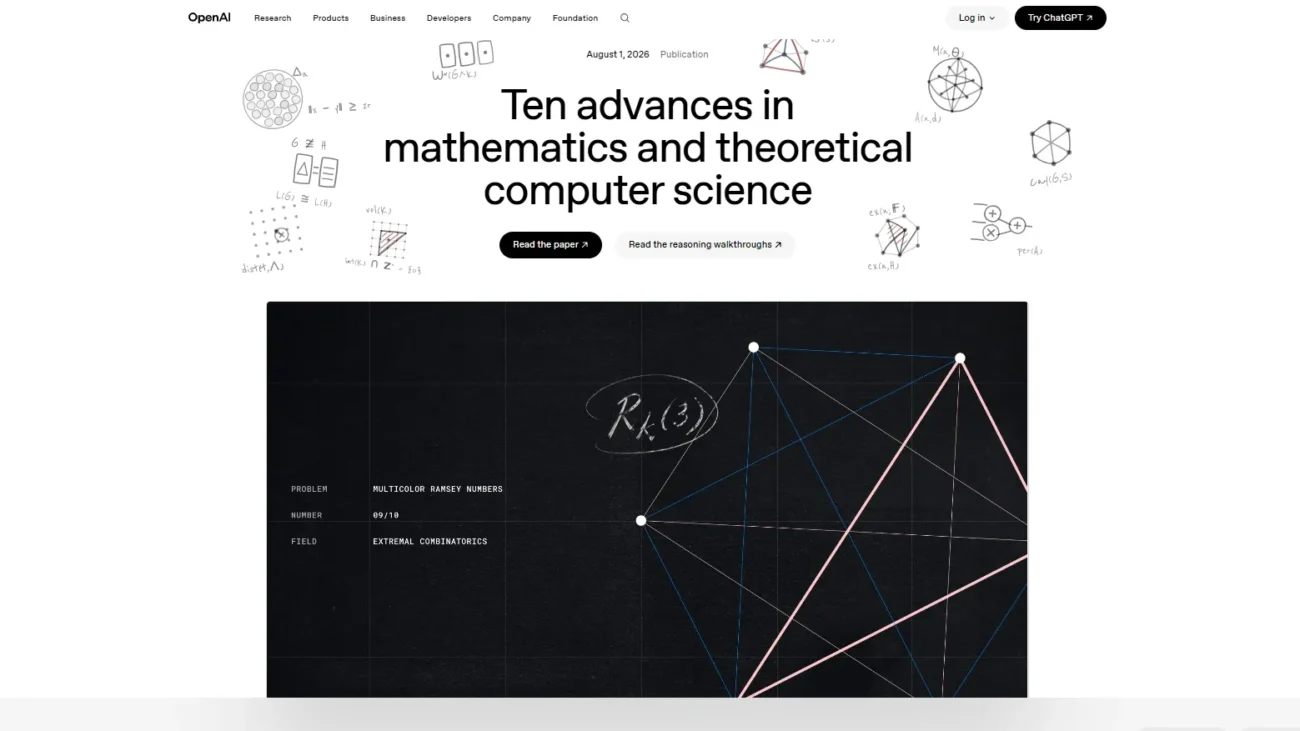
The strategic shock was the price tag. OpenAI calculated that the total compute to produce all ten solutions — each a substantial advance in its field — would cost roughly $2,000 at GPT-5.6 Sol API rates. Each argument was then formalised into a Lean certificate by the same model. This is the first time a single frontier model has produced multiple publishable results in pure mathematics at a cost below a typical graduate stipend.
References: Official results page (with Lean certificates) · Forbes analysis
3. Kimi K3 — Moonshot AI’s 2.8-Trillion-Parameter Open Source Model
Chinese lab Moonshot AI’s Kimi K3 became the largest open-source model ever released with 2.8 trillion total parameters — roughly 75% larger than DeepSeek’s V4 Pro. It was the first Chinese model to top Arena.ai’s coding leaderboard and ranks third on Artificial Analysis’ Intelligence Index, catching up to closed frontier systems like GPT-5.6 and Fable 5. A 1-million-token context window, compressed Mixture-of-Experts routing and depth-aware residuals make it the largest model yet demonstrated to run on consumer hardware via the WASTE inference stack.
References: VentureBeat launch report · Yahoo Finance leaderboard analysis
4. The Second Wave — Grok 4.6, Gemini 3.7 Flash, GLM-5.3, DeepSeek V4 Pro and Ultrafast
Between 10 and 15 August, six frontier updates landed in roughly 72 hours: xAI’s Grok 4.6 (500K-context agentic flagship), Google’s Gemini 3.7 Flash (three weeks after 3.6), Z.ai’s GLM-5.3 (open-weights coding leader with emergent cyber capabilities), DeepSeek’s official V4 Pro 0813 (1.7T), OpenAI’s Ultrafast tier (GPT-5.6 Sol at 14× speed), and Qwen’s open-weight drop. The cadence itself is the news — frontier labs now ship on a weekly, not quarterly, rhythm.4
Grok 4.6 is a post-training upgrade over Grok 4.5 focused on long-running agentic tasks, coding and visual/design work, with a 500K context window. Gemini 3.7 Flash, launched 13 August, is Google’s “most intelligent workhorse model”, replacing 3.6 Flash at an introductory $0.75/$3.75 per million tokens (Recently gemini has released Gemini Spark if you want to learn more then you can read our article about Gemini Spark). GLM-5.3, released 14 August on a 743B base, claims a 50% coding improvement over GLM-5.2 and leads CyberGym and AutomationBench — with open weights staged about two weeks out. DeepSeek-V4-Pro-0813 is the official 1.7T release superseding the preview with greatly enhanced agentic capabilities. And OpenAI’s Ultrafast preview runs GPT-5.6 Sol up to 14× faster — around 750 output tokens per second — powered by Cerebras.
| Release | Org | Headline spec | Access |
|---|---|---|---|
| Grok 4.6 | xAI | 500K context; long-running agents | xAI API |
| Gemini 3.7 Flash | Workhorse; 3-week cadence | $0.75/$3.75 per 1M | |
| GLM-5.3 | Z.ai (Zhipu) | 743B base; +50% coding over 5.2 | Coding Plan; weights staged |
| DeepSeek V4 Pro 0813 | DeepSeek | 1.7T official; agentic boost | HF + API |
| GPT-5.6 Sol Ultrafast | OpenAI | 14× speed; ~750 tok/s | API preview (Cerebras) |
| Qwen3.8-27B | Alibaba | Dense; hybrid-attention backbone | Open weights |
References: Grok 4.6 (xAI) · Gemini 3.7 Flash (Google) · GLM-5.3 (Z.ai) · DeepSeek V4 Pro 0813 (HF) · Ultrafast (OpenAI)
| Model | Total params | Active params | Open weights | Context window |
|---|---|---|---|---|
| Qwen 3.8-Max | 2.4T | 95B | Yes (live on HF) | 128K |
| Kimi K3 | 2.8T | Not disclosed | Yes | 1M |
| DeepSeek V4 Pro 0813 | 1.7T | Not disclosed | Yes | 128K |
| OpenAI Astra | Undisclosed | Undisclosed | No | Undisclosed |
| Grok 4.6 | Undisclosed | Undisclosed | No | 500K |
| GLM-5.3 | 743B | Not disclosed | Staged (~2 weeks) | Not disclosed |
When an AI solves ten millennium-scale math problems for less than a month’s rent in a Bangalore studio apartment, the cost of discovery has collapsed.
The Astra price signal
Agentic Frameworks — LongHorizon, BigBang, DeepSeek Harness, Nemotron Lightning and Muse Glimmer
The agentic layer is now as important as the model itself: LongHorizon-Harness lifts mid-tier models past frontier baselines, BigBang-v1 beats 1.6T models at 35B via self-evolving training, DeepSeek open-sourced a plugin-everything agent harness, NVIDIA paired a 30B open MoE with a model-routing library, and Meta plus Cactus Compute bookended local agents with a 30B model and a 14MB one. Architecture, training and harness now matter more than raw parameter count.
LongHorizon-Harness — the MEA loop that lifts mid-tier models past frontier
LongHorizon-Harness attacks the “context rot” problem that plagues long-running agents. Instead of dumping execution history into one expanding context window, it isolates three roles: a Manager (maintains verified task state), an Executor (runs each subtask in a fresh, disposable context), and a read-only Auditor (inspects the real environment against the subtask contract). This Manage-Execute-Audit (MEA) loop lifted Qwen 3.7-Plus from 51.8% to 80.7% on WeaveBench, from 2.8% to 8.3% on OSWorld 2.0, and from 69.7% to 77.2% on Terminal-Bench 2.1.
  MANAGER            EXECUTOR              AUDITOR
─────────          ────────────          ────────────
State: verified    Fresh context         Read-only
Next subtask?   →  Run subtask       →   Inspect files
                     Discard trajectory     Compare to
                                            contract
References: Research paper (arXiv 2608.01964) · Code (GitHub)
BigBang-v1 — 35B model beating 1.6T via self-evolving training
BigBang-v1 is a 35B-A3B MoE model (35B total, 3B active) built on Qwen 3.6-35B-A3B that eliminates human-curated training data. Instead, post-training uses a three-agent loop: Generator Agents (craft hyper-complex technical problems), Critic Agents (identify and filter mistakes) and Metacritic Agents (verify exercises improve real-world performance). It beat DeepSeek V4 Pro Preview (1.6T parameters) on FrontierScience Research, PaperBench, and BioMysteryBench-HD, and is first among 35B-class models on 10 of 11 benchmarks.
References: Code (GitHub) · Weights (Hugging Face) · Paper (PDF)
DeepSeek Harness — “everything is a plugin”
DeepSeek Harness is an open-source, MIT-licensed agent runtime built on the Cordis meta-framework around one idea: everything is a plugin — models, tools, skills, sessions and sandboxes all plug into the same Node.js runtime. Released as a developer preview with source on GitHub, it pairs naturally with the V4 Pro 0813 release; early community reports note a higher token-caching rate than Claude Code on identical workloads.
References: Official developer preview · Source (GitHub) · The New Stack explainer
NVIDIA Nemotron 3.5 Lightning + NeMo Switchyard — routing as a first-class primitive
NVIDIA shipped Nemotron 3.5 Lightning, a 30B open MoE model built for the repetitive tasks agents run all day, with up to 4× faster output that runs locally on RTX PRO workstations and DGX systems — alongside NeMo Switchyard, an open-source routing library that decides which model runs which subtask. It is the enterprise answer to the same lesson LongHorizon teaches: routing and harness are now performance features.
References: NVIDIA blog · Futurum analysis
Local agents at both ends — Meta Muse Glimmer 30B and Cactus Needle 14MB
Meta’s Muse Glimmer is a 30B dense, Apache-2.0 model distilled from Muse Spark, with a 120K+ context window, tuned for tool use, long tasks and failure recovery — small enough to run on a Mac or PC with 24GB of VRAM for always-on local agents. At the opposite extreme, Cactus Needle 2 is an open 45M-parameter model shipped as a single 14MB binary for tool calling, device use and structured extraction on phones, wearables, smart-home hubs and microcontrollers. Together they define the local-agent stack: Glimmer on your desk, Needle in your pocket.
References: Meta research blog · Muse Glimmer weights (HF) · Needle (GitHub) · Needle 2 weights (HF)
Meta’s Muse Spark 1.2 and Muse Code — a million-token coding agent
Meta launched Muse Code in beta on the back of Muse Spark 1.2, a 1-million-token-context coding model priced at $1.25 per million input tokens and $4.25 per million output. Muse Code runs as a terminal-based coding agent that plans changes, writes code, validates the result, and runs in persistent async background sessions — directly targeting Anthropic’s Claude Code and OpenAI’s Codex on price.
References: Meta official blog · CNBC
3D Generation and CAD — MAC, Hunyuan3D-Buffalo 1.0 and WorldClaw
Three August releases collapsed the cost of going from text to 3D: Tsinghua’s MAC generates printable CAD at 1/13th the cost with a 99.3% feature pass rate, Tencent’s Hunyuan3D-Buffalo 1.0 unifies generation, editing, QA and part decomposition in one pipeline, and the new Hunyuan3D-WorldClaw scales agentic 3D generation from single objects to fully explorable, editable open worlds.
MAC (Multi-Agent CAD) — text to printable 3D for $0.15 per model
MAC, developed at Tsinghua University’s IEI Lab, decouples CAD generation into four LangGraph-orchestrated agents: a Spec Planner, a Geometric Architect, a Python Coder, and an Autonomous Skill Loop that feeds code exceptions to an Aider repair loop. A deterministic zero-token translator handles standard operations — fillets, extrudes, chamfers, shells, patterns — without invoking the LLM.
The results are dramatic: 116× fewer tokens and 13× lower API costs than prior text-to-CAD techniques, with feature pass rate elevated to 99.3%. MAC successfully models print-in-place multi-body assemblies with 0.4–1.0mm clearances (Ball-in-Cage, spinning Gyroscopes) that move straight off the print bed.
References: Code and models (GitHub) · 3Druck.com explainer
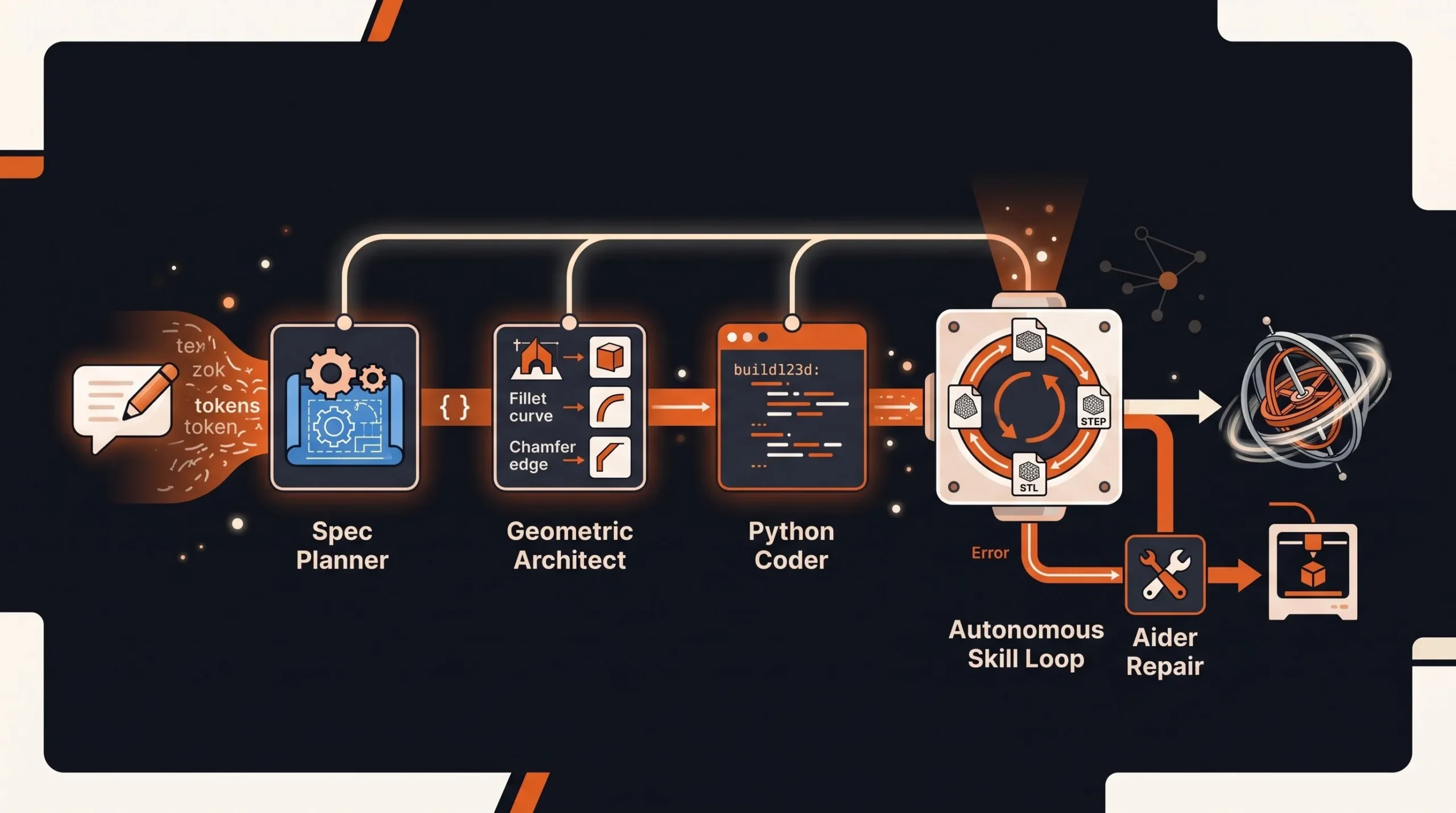
MAC’s four-agent pipeline
The Spec Planner never sees raw conversation history — it receives a clean JSON state. The Architect never sees Python errors — those go directly to the Skill Loop. This decoupling is what produces the 116× token reduction.
Hunyuan3D-Buffalo 1.0 — Tencent’s unified multimodal 3D pipeline
Hunyuan3D-Buffalo 1.0 is a single unified model that performs text-to-3D generation, instruction-guided 3D editing (“turn the head into a bull’s head”), 3D scene QA, and part-level semantic decomposition. Powered by a shared Hunyuan3D-VLM backbone connected to scalable DiT generative modules, it achieves state-of-the-art on both text-to-3D and 3D editing benchmarks.
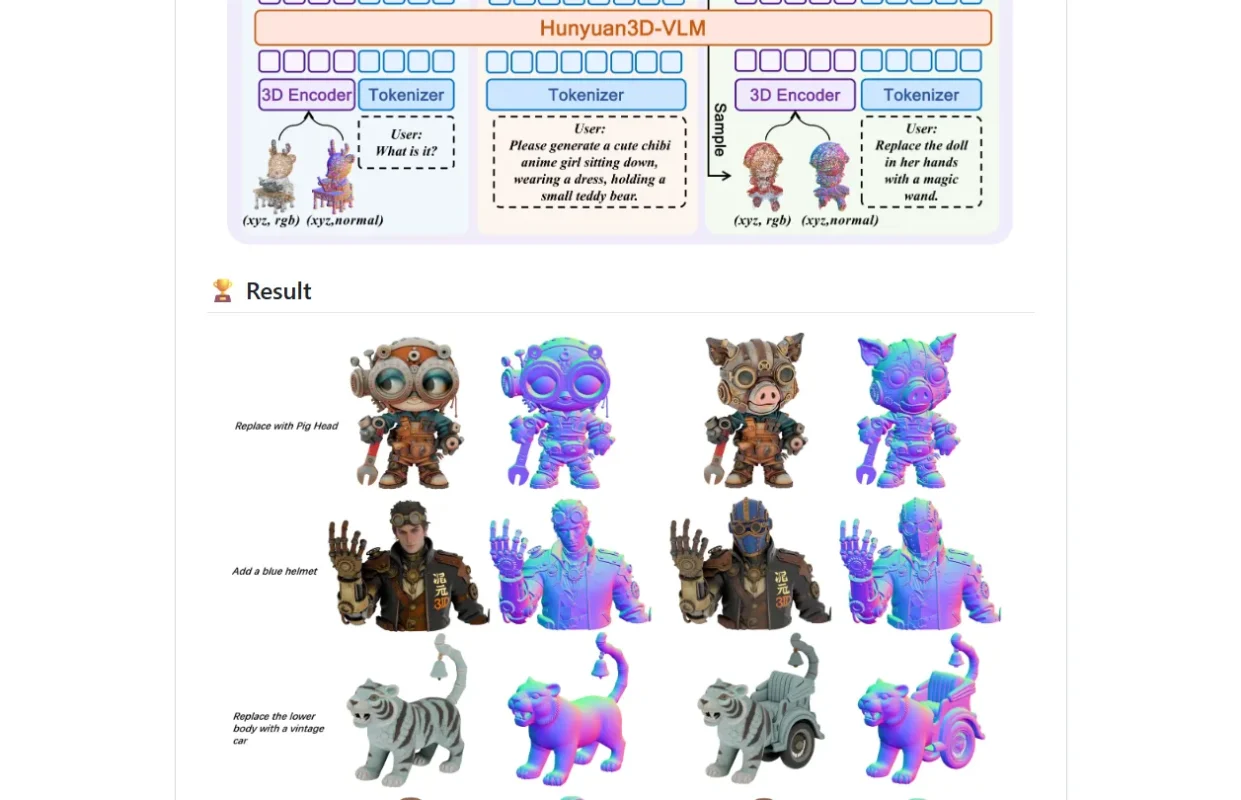
References: Tech report (arXiv 2608.02711) · Code (GitHub)
Hunyuan3D-WorldClaw — one sentence to a full explorable 3D world
WorldClaw is a fully agentic, coarse-to-fine framework for open-world 3D scene generation at scale: planning agents translate a single text prompt into walkable, editable 3D worlds with coherent terrain and structures — moving 3D generation from objects to environments. The paper and project page are public (arXiv 2608.05248).
References: Code (GitHub) · Paper (arXiv 2608.05248)
Embodied Robotics — Xiaomi XR-1, Persona AI, UBTECH and Dyna-2
Four embodied-AI milestones landed in August: Xiaomi-Robotics-1 proved embodiment-free pre-training on 100,000+ hours of human-held camera data, Dyna-2 then scaled the same idea to over one million hours of human video with demonstrable scaling laws, Persona AI’s Gen 1 humanoid welded real shipyard joints via VR teleoperation, and UBTECH’s Cruzr Y1 ran a warehouse swarm with zero overlapping paths.
Xiaomi-Robotics-1 (XR-1) — embodiment-free pre-training at scale
XR-1 is a VLA foundation model pre-trained on over 100,000 hours of real-world UMI manipulation trajectories spanning 1,700+ scenarios. The key insight is embodiment-free pre-training: instead of collecting robot-specific data, Xiaomi used hand-held camera grippers operated by humans, then ran an automated VLM labelling pipeline that segmented videos into clips with text state-transition notes.
Post-training aligns the model with 10,000+ hours of actual robot data. A Mixture-of-Transformers (MoT) architecture merges a Qwen3-VL core with a smaller Diffusion-Transformer for fast, asynchronous inference on consumer-tier GPUs. XR-1 evaluates first on RoboCasa365 and RoboDojo benchmarks.
References: Official model page · Paper (arXiv 2607.15330) · Code (GitHub)
Dyna-2 — a 1-million-hour scaling law for world-action models
Dyna-2 is a world-action model pre-trained on over one million hours of human video — 10× XR-1’s dataset — and the first to exhibit clear scaling laws on held-out human data at this scale, with exceptional zero-shot robustness. DYNA Robotics already deploys commercial-grade robots in hospitality, logistics and factory operations, making Dyna-2 a rare case of a scaling-law result shipping inside production hardware.
References: Dyna-2 research page · MarkTechPost coverage
Persona AI Gen 1 — humanoid welding via VR teleoperation
Houston-based Persona AI demonstrated its Gen 1 humanoid robot performing real welding in a workshop, controlled by a human via VR teleoperation. Every movement is recorded as training data. The target deployment is HD Hyundai’s shipyards, directly addressing the skilled-welding labour crisis in heavy industry.
References: Persona AI official site · The Robot Group field analysis
UBTECH Cruzr Y1 — wheeled humanoid swarm intelligence
UBTECH unveiled the Cruzr Y1, a wheeled industrial humanoid operating in automated warehouses under an overarching swarm intelligence system. The robots collaboratively manage pallets and distribute items with zero overlapping paths or redundant tasks. This follows UBTECH’s June 2026 launch of the UWORLD U1, described as the world’s first mass-produced ultra-bionic full-size humanoid.
References: UBTECH swarm demonstration (official post)
Healthcare & Accessibility AI — ClinFusion and DeepMind SL2T
Two human-impact releases stand out: ClinFusion, Alibaba DAMO’s vision-centric multimodal LLM that unifies 2D scans and native 3D CT/MRI volumes and tops 20 of 24 medical benchmarks, and Google DeepMind’s SL2T, a sign-language-to-text model that lets Deaf and hard-of-hearing users sign to Gboard and Live Transcribe anywhere they would normally type.
ClinFusion — native 3D medical understanding with public weights
ClinFusion solves the fundamental clinical imaging dilemma: medical AI must synthesise multi-modal data spanning complex 2D scans and volumetric 3D files. A compositional vision encoder (DINOv2 + ConvNeXt) with a Cascade Spatial-Aware Locality Fusion operator on a Qwen3-VL base accepts native NIfTI .nii.gz files directly via a nifti_to_image_slices utility. In blinded evaluations by board-certified radiologists, ClinFusion produced the highest-ranked clinical reports, and the open ClinFusion-32B release makes it the first medical MLLM hospitals can actually audit and fine-tune.
References: Paper (arXiv 2607.24743) · Code (GitHub) · ClinFusion-32B weights (HF)
DeepMind SL2T — sign to your phone instead of typing
SL2T (sign-language-to-text) reads hand, body and facial movements simultaneously and maps pose landmarks straight to text — replacing a decade of gloss-annotation middleware. It is shipping in Gboard and Live Transcribe for ASL users, enabling Deaf users to sign to their phone anywhere they would normally type. It is the month’s clearest example of frontier perception research reaching a consumer accessibility feature.
References: DeepMind blog · NDTV coverage
Creative Synthesis — LeapTalk, LTX-2.5, MAGI-2, JoyAI-Video-Edit and the Open Audio Stack
The creative layer went open and real-time in mid-August: LTX-2.5 and MAGI-2 brought open-weights synchronized audio-video generation, JD’s JoyAI-Video-Edit edits live video streams at 30 FPS, LeapTalk still leads talking heads at 200 FPS, and a fully open audio stack appeared — IndexTTS 2.5 for voice cloning, MiniMax Music 3 for five-minute songs, MuScriptor for transcription, and MiDashengLM-Gen for audio scene generation.
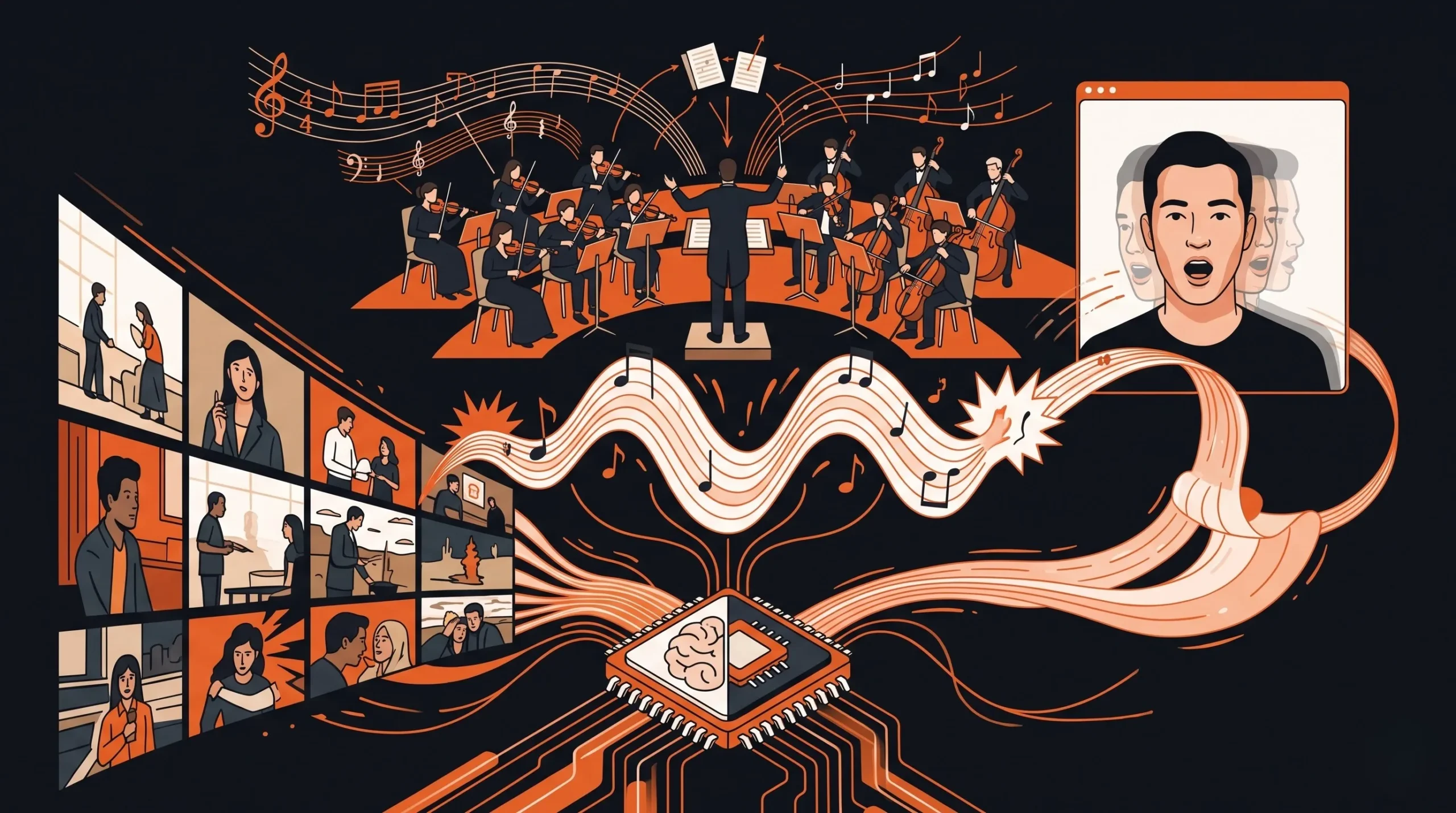
LTX-2.5 and MAGI-2 — open-weights audio-video world models
LTX-2.5 (Lightricks) is a 22B open-weights “world model” that generates synchronized video and audio in a single pass, handles multi-shot scenes in one go, edits real footage and exports cinema-grade EXR — generating a 10-second clip from an image in 6.8 seconds on NVIDIA superchips, free for organisations under $10M revenue. MAGI-2 Preview (Sand.ai) is a 114B unified audio-video MoE that activates just 6B parameters per token, turning text or images into 10-second clips with synchronized audio. Both run and fine-tune on your own hardware — the opposite of closed video APIs.
References: LTX-2.5 weights (HF) · VentureBeat benchmarks · MAGI-2 (GitHub)
JoyAI-Video-Edit — real-time open-ended editing of live streams
JoyAI-Video-Edit (JD) is a 16B autoregressive diffusion framework that edits open-ended video streams in real time — no future frames needed — hitting 720p streaming edits at 30.19 FPS on a single B200. Open-sourced under Apache 2.0 with the complete training pipeline, it enables “edit characters and scenes on the fly as the video plays” with no length limit.
References: Code (GitHub) · Paper (arXiv 2608.03974)
The open audio stack — IndexTTS 2.5, MiniMax Music 3, MuScriptor, MiDashengLM-Gen
- IndexTTS 2.5: zero-shot TTS that clones a voice from one reference clip, multilingual, with a 2.28× real-time-factor improvement over IndexTTS 2 (released 10 August).
- MiniMax Music 3.0: open-weights generation of complete songs up to five minutes, 32 kHz 16-bit stereo — a local answer to Suno.
- MuScriptor: open-weight multi-instrument automatic music transcription (any recording to MIDI) in 103M/307M/1.4B sizes, from Mirelo × Kyutai.
- MiDashengLM-Gen: Xiaomi’s unified framework for end-to-end audio scene generation (speech + music + environment) with markedly better intelligibility.
References: IndexTTS (GitHub) · MiniMax Music 3 in ComfyUI · MuScriptor paper · MiDashengLM demo
LeapTalk — 200 FPS talking head via Brownian Bridge
LeapTalk achieves real-time talking-head generation from any portrait photo and speech audio stream at up to 200 FPS on a single H200 GPU, formulating a data-to-data Brownian Bridge transport anchored to a persistent reference image to eliminate identity drift. Meanwhile SCoPE adds sightline-coordinate positional encoding — giving every video token its camera ray — bringing precise camera control to pretrained video diffusion transformers, complementing Wan-Animate-2’s text-driven viewpoint control.
References: LeapTalk project page · LeapTalk code (GitHub) · SCoPE project page · Wan-Animate-2 research page
VocalRender and SymphonyGen — score-native music AI
VocalRender directly renders composer-oriented symbolic scores (lyrics, MIDI pitches, note values, tempo) into expressive singing audio without manual phoneme alignment, released in under-10GB formats with open training pipelines. SymphonyGen (ISMIR 2026) replaces flat token streams with a 3D cascading decoder over bar, track and event axes, letting composers steer a harmony skeleton into full orchestral arrangements with RL against a CLaMP 3 acoustic reward.
References: VocalRender paper · VocalRender weights (HF) · SymphonyGen demo · SymphonyGen weights (HF)
Climate Intelligence — WeatherNext’s Hurricane Melissa Forecast
Google DeepMind’s WeatherNext, published in Nature, achieved state-of-the-art accuracy in predicting a cyclone’s track, intensity and wind structure up to 15 days in advance, gaining forecasters a full day’s worth of predictive accuracy — equivalent to a decade of meteorological progress.3 During the 2025 hurricane season it enabled the National Hurricane Center to predict Hurricane Melissa’s rapid intensification and Category 5 landfall in Jamaica five days before impact. The model runs a 1,000-member ensemble on a single TPU in under a minute, and DeepMind has open-sourced the code and weights.
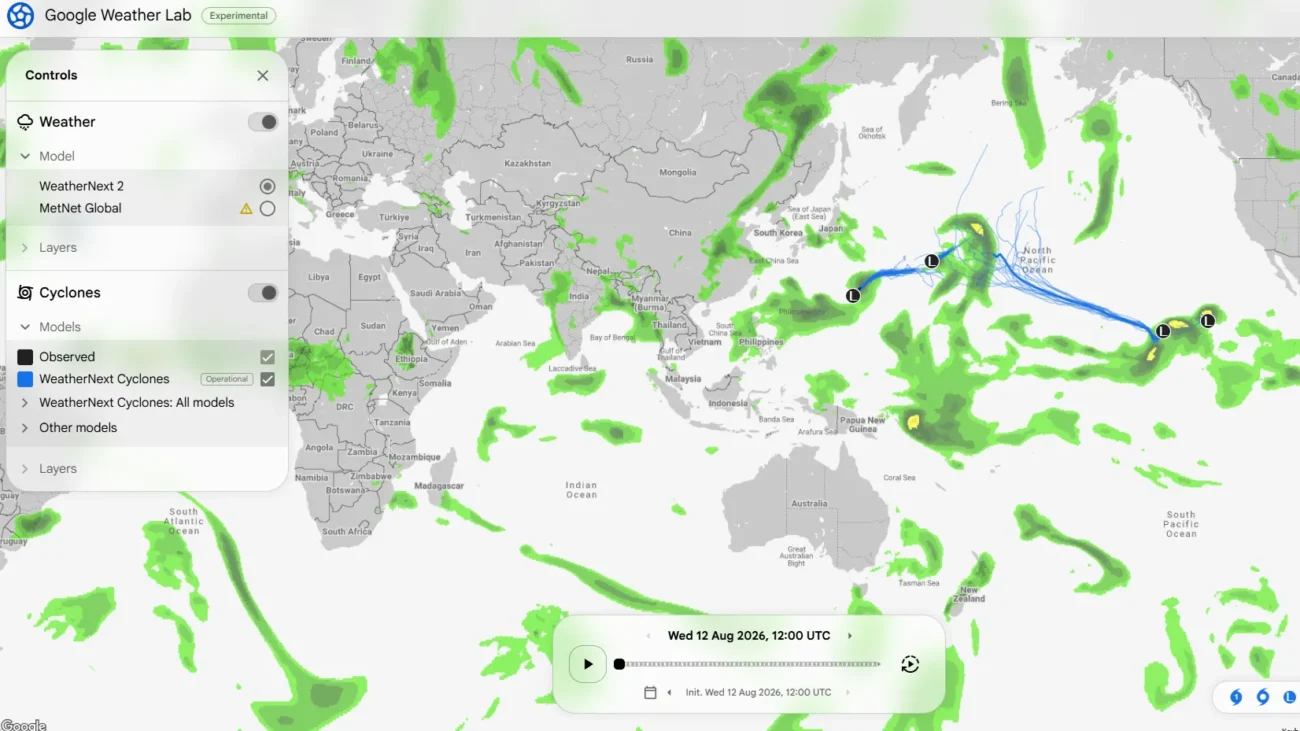
WeatherNext was co-developed by Google DeepMind and Google Research with the NHC, CIRA, the UK Met Office and agencies worldwide, co-trained on nearly 20 terabytes of atmospheric data and the IBTrACS database of ~5,000 storms. Despite operating on 100× coarser resolution (28×28 km) than traditional NWP models, it outperforms them on track, intensity and wind structure.
References: DeepMind research blog · Nature paper · Code and weights (GitHub)
WeatherNext predicted Hurricane Melissa would make landfall in Jamaica as a Category 5 hurricane — five days before it happened, when other models still showed two equally likely scenarios.
Google DeepMind, WeatherNext case study
| Metric | Traditional NWP | WeatherNext | Gain |
|---|---|---|---|
| Track accuracy at 3 days | Matches at 2 days | SOTA | +24 hours lead time |
| Intensity (Vmax) | High-res required | Fine-scale fidelity | +24 hours lead time |
| Ensemble generation | Hours on supercomputers | < 1 minute on single TPU | 100× efficiency |
| Input resolution | Fine (~0.25°) | Coarse (28×28 km) | 100× less compute |
| Code availability | Closed operational | Open-sourced | Global access |
Adopt now
- LongHorizon-Harness MEA loop + DeepSeek Harness plugins for agent reliability
- Qwen3.8 open weights (2.4T-A95B or 27B) for self-hosting
- LTX-2.5 for open-weights audio-video; MAC for sub-dollar CAD
- Needle 2 (14MB) for on-device tool calling; WeatherNext 2-mini for disaster prep
Watch and wait
- GLM-5.3 open weights (staged ~2 weeks out)
- Astra until OpenAI ships public API access
- Ultrafast until it exits preview
- Humanoid swarms until safety certifications land
What It All Means — The Strategic Verdict
August 2026 consolidated four structural shifts: the collapse of discovery cost (Astra’s $2,000 math), the democratisation of Max-class intelligence (Qwen 3.8 open weights now live on Hugging Face), the decoupling of capability from parameter count (BigBang-v1, LongHorizon, Nemotron Switchyard), and the opening of the creative stack (LTX-2.5, MAGI-2, MiniMax Music 3). For practitioners, architecture, harness design and routing now matter more than which frontier model you run.
The cost of scientific discovery has collapsed
OpenAI Astra solving 10 decade-old mathematics problems for $2,000 is the clearest price signal the industry has ever produced. Expect a Cambrian explosion of AI-generated results in pure mathematics, theoretical computer science and cryptography through 2027, most of them formalised in Lean or Coq before human mathematicians have read the preprints.
Architecture, harness and routing now beat parameter count
BigBang-v1 (35B) beating DeepSeek V4 Pro Preview (1.6T), LongHorizon lifting Qwen 3.7-Plus past Claude Opus 4.7, DeepSeek Harness making every component a plugin, and NVIDIA’s Switchyard making model-routing a library — all tell the same story. The highest-leverage investment in 2026 is not a bigger model but a better harness.
Industrial and accessibility AI have matured into deployment
Persona AI welding for HD Hyundai, UBTECH’s warehouse swarm, Dyna-2 shipping scaling laws inside production robots, WeatherNext forecasting real storms, and SL2T putting sign-language input into Gboard — these are deployments with named customers and named users, not lab demos.
August 2026 AI Roundup FAQ
The most common questions now concern the open-weight drop (is Qwen 3.8 really on Hugging Face?), the second wave (what is Grok 4.6 / Gemini 3.7 Flash / GLM-5.3?), DeepSeek Harness, and whether the cost collapse is real. In short: yes the weights are live, the second wave shipped 10–15 August, DeepSeek Harness is an open plugin-based agent runtime, and AI-driven discovery cost has fallen below $2,000 per major math result.
Are Qwen 3.8 open weights available now?
Yes. Qwen3.8-2.4T-A95B (the post-trained 2.4T MoE) and the dense Qwen3.8-27B are live on Hugging Face, self-hostable via vLLM or SGLang, with vision input and non-thinking support. The managed Qwen3.8-Max API remains available with native reasoning_effort controls.
What is Grok 4.6?
Grok 4.6 is xAI’s frontier model for coding, agentic tasks and knowledge work — a post-training upgrade over Grok 4.5 focused on long-running agents, with a 500K context window, text and image input, available on the xAI API.
What is DeepSeek Harness?
An open-source, MIT-licensed agent runtime built on the Cordis meta-framework where everything — models, tools, skills, sessions, sandboxes — is a plugin. It shipped as a developer preview with full source on GitHub alongside the official DeepSeek-V4-Pro-0813 release.
Which new model should I use for local agents?
On a 24GB VRAM Mac or PC, Meta’s Muse Glimmer (30B, Apache 2.0, 120K+ context) is purpose-built for always-on local agents. On RTX PRO workstations or DGX, NVIDIA Nemotron 3.5 Lightning plus NeMo Switchyard adds routing. On phones and microcontrollers, Cactus Needle 2 runs from a single 14MB binary.
Is OpenAI Astra actually GPT-6?
OpenAI has not confirmed Astra’s product name. It is described as an unreleased internal version of their next major model. The ten mathematics results were produced by this internal system and formalised in Lean certificates by the same model.
How did WeatherNext help during Hurricane Melissa?
During the 2025 hurricane season, WeatherNext predicted Hurricane Melissa would make landfall in Jamaica as a Category 5 hurricane five days before impact, while other models still showed two equally likely scenarios — giving ground teams critical preparation time.
Can LTX-2.5 really be used commercially for free?
Yes for smaller organisations — LTX-2.5 is free to use for organisations under $10M revenue, with open weights you can run and fine-tune on your own hardware. It generates synchronized audio-video in a single pass and edits real footage.
What does “116× fewer tokens” mean for MAC?
MAC’s four-agent architecture passes structured JSON states instead of full conversation history, using 116× fewer tokens and 13× lower API costs than prior text-to-CAD pipelines, with a 99.3% feature pass rate — a printable CAD model for about $0.15.
Are these releases all real or just marketing?
All releases have verifiable public artifacts: GitHub repositories (LongHorizon, BigBang, MAC, Buffalo, WorldClaw, ClinFusion, XR-1, DeepSeek Harness, JoyAI, Needle), peer-reviewed papers (WeatherNext in Nature, SymphonyGen at ISMIR), Hugging Face weights (Qwen3.8, LTX-2.5, MAGI-2, IndexTTS 2.5, MiniMax Music 3), or official vendor pages (Grok 4.6, Gemini 3.7 Flash, GLM-5.3, Ultrafast, SL2T, Dyna-2).