

AI News – September 2026 First Week: Every Model, Robot, and Tool That Shipped in August & September 2026
Grab your chai — late August and early September 2026 just broke the internet, and no, that is not a figure of speech. The mysterious “Ox Alpha” stealth model was unmasked as Z.AI’s GLM 5.3 Flash, Alibaba dropped a literal preview of Qwen 4, Anthropic shipped Claude Fable 5.1 and Mythos 5.1 on September 1, World Labs unveiled the spatial world model Atlas, and Beijing’s World Humanoid Robot Games saw machines officially outrun human sprint speeds and smash standing high jump records. Beyond the flagships, we’re seeing a massive shift toward interactive world models like Evoke, real-time video synthesis with FastH3, agentic harnesses like NVIDIA’s AVO, and open-source voice studios that finally rival ElevenLabs locally. Whether you’re a developer in Bengaluru, a 3D artist in Pune, or just someone who scrolls AI news at midnight, this is the most packed month we have ever seen.1 Read the AI news till 18th September here
Key Takeaways
- The stealth reveal: The “Ox Alpha” model topping OpenRouter is Z.AI’s GLM 5.3 Flash — 320B total / 18B active, native vision, priced at $0.045 per task.2
- Anthropic’s September shock: Claude Fable 5.1 and Claude Mythos 5.1 launched September 1, 2026, with doubled science scores and a new anti-distillation safeguard.3
- World Labs Atlas: The first multimodal omni world model for spatial intelligence shipped September 1 with pixel-perfect camera control.4
- Qwen 4 preview: Alibaba’s Qwen 3.8 Flash Next (125B / 6B active) introduces gated delta nets and engram embeddings, beating DeepSeek V4 Flash on agentic coding.
- OpenAI price war: GPT-5.6 Sol got a 20%+ price cut on August 21 ($4/M input, $20/M output) — promotional through November 2026.5
- Robotics breaks human records: At the Beijing Games, Tiangong Ultra jumped 4.8m (beating the human 3.73m record), and Unitree’s “Superman” sprinted at 12.7 m/s — past Usain Bolt’s 12.4 m/s peak.
- Agentic harnesses win: NVIDIA’s AVO lifted Claude Opus 5 from 30% to 100% on ARC-AGI-3, proving architecture matters more than raw parameter count.
- Meta’s $17B reckoning: Meta agreed to pay up to $17 billion over 10 years to settle the biggest child-safety tech payout in history.6
- Open-source voice revolution: VoiceStudio hit GitHub trending as a fully-local, open-source ElevenLabs alternative with voice cloning, dubbing and audiobook creation.7
In This Deep Dive
- The Frontier & Flash LLM Wars
- The September 1 Shock — Claude Fable 5.1, Atlas, Gemini 3.8
- Video Synthesis & Interactive Worlds
- 3D Generation & Spatial AI
- Image, Audio & Creative Synthesis
- Agentic Systems & Harnesses
- Planetary Intelligence & Benchmarks
- The Robotics Revolution
- Local AI Hardware & Open-Source Voice
- Industry Shifts — Meta’s $17B, GPT-5.6 Price Cut
- FAQ
August–September 2026: the month open-weight flagships, real-time video synthesis, and record-breaking humanoids all shipped at once — like the entire industry hit “publish all” by accident.
The Frontier & Flash LLM Wars
The LLM landscape split into two simultaneous revolutions in late August 2026: frontier-class models finally arrived with open weights, while “flash” models reached near-frontier intelligence at orders-of-magnitude lower cost. The stealth “Ox Alpha” model dominating OpenRouter was revealed as GLM 5.3 Flash, Alibaba previewed the Qwen 4 architecture, Tencent dropped Hy4 under Apache 2.0, and a self-improving model family called Ornith 1.5 proved that closed-loop training can beat models twice its size.
1. GLM 5.3 Flash — The Stealth “Ox Alpha” Revealed
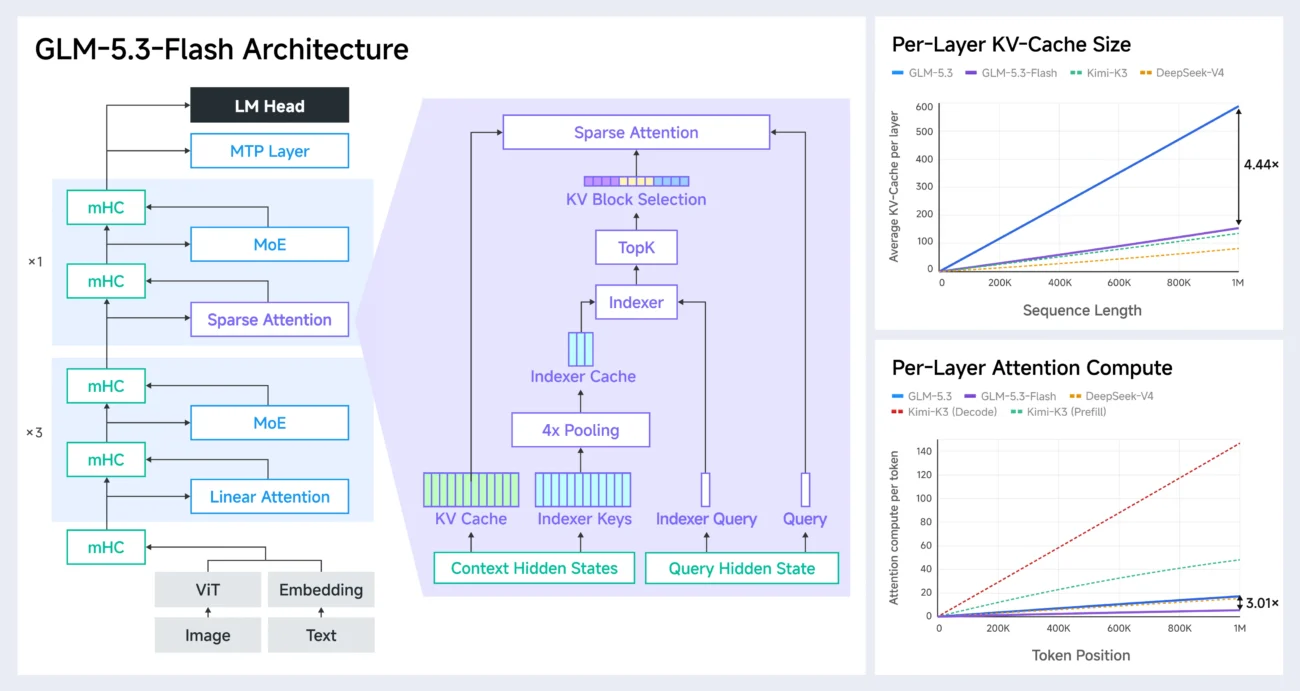
GLM 5.3 Flash is Z.AI’s new 320-billion-parameter flagship, and the big deal is that it topped global leaderboards while hiding behind a fake name. For weeks, a model called “Ox Alpha” was quietly crushing everything on OpenRouter, and every lab Discord was trying to figure out who built it. The answer: Z.AI, and they did the entire stunt on Chinese-made AI chips — no NVIDIA required.
What it is: a mixture-of-experts (MoE — a design where only a slice of the model runs per token) model with 320 billion total parameters but only 18 billion active per inference. Why it matters: frontier labs like OpenAI and Anthropic usually run trillion-parameter models, and this thing is trading blows with them at a fraction of the size. It also has native vision — the first GLM model to see images, documents, and videos natively — which makes it suddenly useful for front-end dev, document analysis, and screenshot-based debugging.
The price is the real story. At roughly $0.045 per task — about ₹4, cheaper than a cutting chai — GLM 5.3 Flash is dozens of times cheaper than competing frontier models. Z.AI pulled it off by combining linear attention with sparse attention, cutting attention computation by 3× and shrinking the KV cache (the model’s working memory) by 4.4×. And the hallucination rate sits at just 20% on their benchmark, versus 60% for Opus 5 and 80–90% for GPT 5.6. As of September 2, 2026, GLM-5.3 and GLM-5.3-Flash are officially leading Hugging Face’s trending models list.8
So what this means for you: if you are deploying agents that chew through millions of tokens a day, this is the single best cost-to-intelligence ratio available right now — and you can even run it locally if you have the hardware.
References: Z.AI Official Blog · Hugging Face Weights · Developer Docs
2. GLM 5.3 — The Heavyweight Open-Source Champion
GLM 5.3 is the full, uncut version of Z.AI’s flagship, and right now it is the most intelligent open-source model you can download. If the Flash version is a sports bike, this is the freight train — 753 billion parameters, 756 GB raw, and it scores within a point or two of the best closed GPT and Claude models on aggregate intelligence indices.
What it is: Z.AI’s flagship text model, tied with Kimi K3 at the top of the open-weight charts. Why it matters: this level of intelligence used to exist only behind paywalls. Thanks to Unsloth’s 1-bit GGUF quantization, the whole thing compresses to 217 GB — meaning you can run near-frontier intelligence on a stack of two or three high-end GPUs. For Indian startups that want frontier-class reasoning without paying a dollar-denominated API bill forever, this is the local option that finally works.
References: Hugging Face Weights · ZCode Official Harness
3. Qwen 3.8 Flash Next — Alibaba’s Qwen 4 Architecture Preview
Qwen 3.8 Flash Next is Alibaba’s latest small-but-mighty model, and the interesting part is that it is literally a test drive for the upcoming Qwen 4 architecture. They released 3.8 and are already teasing Qwen 4 — the pace is getting hard to keep up with, and I say that as someone who covers this stuff for a living.
What it is: a 125B-parameter MoE model with only 6B active per token, priced at roughly 10 cents per task — GPT costs about nine times more. Why it matters: it beats DeepSeek V4 Flash and Claude Opus 4.6 Max on most agentic coding benchmarks, and on the Arena webdev leaderboard it is tied with GPT 5.6 Soul. The trick is a hybrid memory design. Three out of every four layers use a gated delta net — think of it like maintaining a running summary in the margins of a giant book — while the remaining layers use Qwen sparse attention to flip back to the exact page when they need a specific detail. They also added 51B “engram embeddings”, basically a giant lookup memory for local patterns.
So what this means for you: Opus-level intelligence now fits on a single RTX 6000-class GPU (the 1-bit GGUF is just 72.5 GB). Six months ago that sentence would have sounded like science fiction.
References: Qwen Official Blog · Hugging Face Weights · FlashQLA Kernel Library
4. Tencent Hy4 Preview — 770B MoE Under Apache 2.0
Hy4 Preview is Tencent’s best model ever, and the surprising part is that a company better known for WeChat is now shipping genuinely competitive open-source AI. It is released under Apache 2.0 — the most permissive common license — so you can build a business on it without a lawyer reading the fine print first.
What it is: a 770B-parameter MoE model with 49B active, borrowing gated sparse attention and index cache ideas from DeepSeek and GLM, plus “identity hyper-connections” to smooth information flow between layers. Why it matters: it beats Qwen 3.8 Max and DeepSeek V4 Pro in Tencent’s benchmarks, and on Arena’s webdev leaderboard it is tied with GLM 5.3 Flash. At 1.56 TB raw, it is a monster to host, but the community already produced a 1-bit GGUF at 229 GB. Tencent going full open-source, in other words, is a bigger strategic signal than the benchmark scores.
References: Hugging Face Weights
5. DeepSeek V4 Flash Vision Experimental

DeepSeek V4 Flash Vision is the company’s experimental multimodal variant, and it matters because DeepSeek does not ship fluff — when they label something “experimental,” it usually ships properly a few weeks later. This one matches the text performance of V4 Flash while adding image, video, and document understanding.
What it is: a vision-capable Flash model, API-only for now. Why it matters: on agentic coding benchmarks it matches closed-source Opus 4.8 despite being orders of magnitude smaller, and DeepSeek’s DeepSuite score improved by almost five points in under a month. The iteration speed is the real news here — most labs need a quarter to move that far.
References: DeepSeek API Announcement · Vision API Docs
6. Ornith 1.5 — The Self-Improving Model Family

Ornith 1.5 is a family of open-source models built around one ambitious idea: what if the AI invents its own training data? Instead of humans constantly creating new tasks, the system proposes problems, builds the scaffolds to solve and verify them, generates solutions, and uses the results as reinforcement learning data for itself.
What it is: three models — a 9B dense model, a 35B-A3B MoE, and a 397B MoE flagship — trained in a closed self-improvement loop. Why it matters: the flagship beats GLM 5.2 (twice its size) across agentic coding benchmarks, and the 35B model beats Qwen 3.6 on most. The smallest 4-bit GGUF is under 6 GB, which means even a laptop can run a self-improved reasoning model. It is the closest thing we have yet to an AI that practices on itself overnight and shows up better the next morning.
References: Ornith Official Blog
| Model | Total params | Active params | Open weights | API cost per task |
|---|---|---|---|---|
| GLM 5.3 Flash | 320B | 18B | Yes | $0.045 (~₹4) |
| GLM 5.3 | 753B | Not disclosed | Yes | N/A |
| Qwen 3.8 Flash Next | 125B | 6B | Yes | ~$0.10 (~₹8) |
| Tencent Hy4 Preview | 770B | 49B | Yes (Apache 2.0) | ~$0.10 (~₹8) |
| Ornith 1.5 (35B) | 35B | 3B | Yes | Local only |
| DeepSeek V4 Flash Vision | Undisclosed | Undisclosed | Experimental | Low |
| Claude Fable 5.1 | Undisclosed | Undisclosed | No | $10/M input |
When a 14B model can generate an endless steerable world in three steps while a 753B model struggles to keep a single conversation coherent, the definition of “frontier” has shifted from parameter count to interaction horizon.
The Evoke signal
The September 1 Shock — Claude Fable 5.1, Atlas, and Gemini 3.8 Flash
September 1, 2026 delivered a triple shock to the AI industry: Anthropic launched Claude Fable 5.1 and Claude Mythos 5.1 with doubled science scores and a new anti-distillation safeguard, World Labs unveiled Atlas — the first multimodal omni world model for spatial intelligence — and Google DeepMind quietly shipped Gemini 3.8 Flash and 3.8 Flash Cyber with proactive cyber defense capabilities. Taken together, these releases signal that September is shaping up to be even more intense than August.
Claude Fable 5.1 & Mythos 5.1 — Anthropic’s September surprise
Claude Fable 5.1 is Anthropic’s new flagship for coding and knowledge work, and it quietly became the benchmark leader on launch day. It sits at 83 on BenchLM — ahead of Claude Fable 5 (82.6) and Claude Opus 5 — and it is priced at $10 per million input tokens, which is Anthropic’s way of saying “premium, but we noticed the Chinese price war.”3
What it is: a frontier model tuned for long-running coding and research tasks, shipped alongside Claude Mythos 5.1, a variant aimed at scientific research. Why it matters: Fable 5.1 ships with invisible anti-distillation safeguards — a technical way of saying competitors can no longer cheaply train clone models on its outputs. It can discover software vulnerabilities but is explicitly blocked from writing exploits, which is Anthropic drawing a careful line between defense and offense. The strategic read: as open-weight Chinese models flood the market with near-frontier intelligence at ₹4 per task, Anthropic is betting that reliability and research depth are the last defensible moats.
References: Anthropic Official Announcement · MacRumors Coverage · Yahoo Tech Analysis
World Labs Atlas — The first omni world model for spatial intelligence
Atlas is World Labs’ new multimodal world model, and Fei-Fei Li’s startup is calling it the first of its kind — a model that understands space the way LLMs understand text. It generates image and video frames with pixel-perfect camera control and persistent spatial coherence.
What it is: an omni world model sitting somewhere between renderer and simulator. It predicts high-quality views of a consistent 3D world (the renderer job) and can also predict how that world evolves over time (the simulator job). Why it matters: feed it multiple input views and it keeps everything consistent as you move the camera around — no drift, no melting furniture, no teleporting objects. The Hacker News thread lit up immediately with comparisons to Evoke and Genie. Early access is open via request, and this is the September release most likely to reshape 3D and robotics workflows by Diwali.
References: World Labs Official Blog · Hacker News Discussion · DataNorth Coverage
World Labs Atlas: the first multimodal omni world model for spatial intelligence, launched September 1, 2026 — think of it as the “GPT moment” for 3D.
Gemini 3.8 Flash & 3.8 Flash Cyber — proactive cyber defense
Gemini 3.8 Flash is Google DeepMind’s latest fast model, and the notable part is not the base model — it is the Cyber variant, which is the first dedicated cyber-defense model shipped as a first-class product by any major lab. “Proactive cyber defense for governments and enterprises” is the pitch, and it exists for one reason: frontier AI capabilities are increasingly weaponized, so someone has to build the shield as fast as the sword.
So what this means for you: if you run a security team, expect these defensive models to start appearing inside enterprise security stacks within the year.
References: Google DeepMind Models Page · LLM Stats Updates
Video Synthesis & Interactive Worlds
Video generation crossed two thresholds simultaneously this month: real-time speed and interactive world coherence. We are no longer just generating static clips; we are building steerable, persistent environments that respond to user input in milliseconds, and we are doing it faster than real-time on modern silicon.
FastVideo FastH3 V1 — 14× Speedup on Blackwell
FastH3 is Hao AI Lab’s answer to the one complaint everyone has about Minimax H3 — the wait. If you have ever generated a video and gone to make chai, come back, and found it still rendering, this one is for you. It makes the best open-source video generator up to 14× faster on select GPUs.
What it is: an open-weight, 4-step sparse distilled variant of Minimax H3. Why it matters: on NVIDIA Blackwell GB200 NVL72 hardware, it generates a 15-second clip in under 30 seconds — faster than real time. The method is clever in two ways. First, DMD2 distillation teaches a smaller, faster generation process to imitate the original model in far fewer steps. Second, video sparse attention keeps only around 10% of the video attention data, cutting a huge amount of computation. And the best part — it is entirely data-free. They used only the already-trained base Minimax model as the teacher, so no extra dataset was needed.
So what this means for you: speed was the main reason most of us avoided local video generation. That excuse just expired.
References: Hao AI Lab Blog · Hugging Face Collection · GitHub Repository
H3 Max by fal — Sub-3-Second Generation
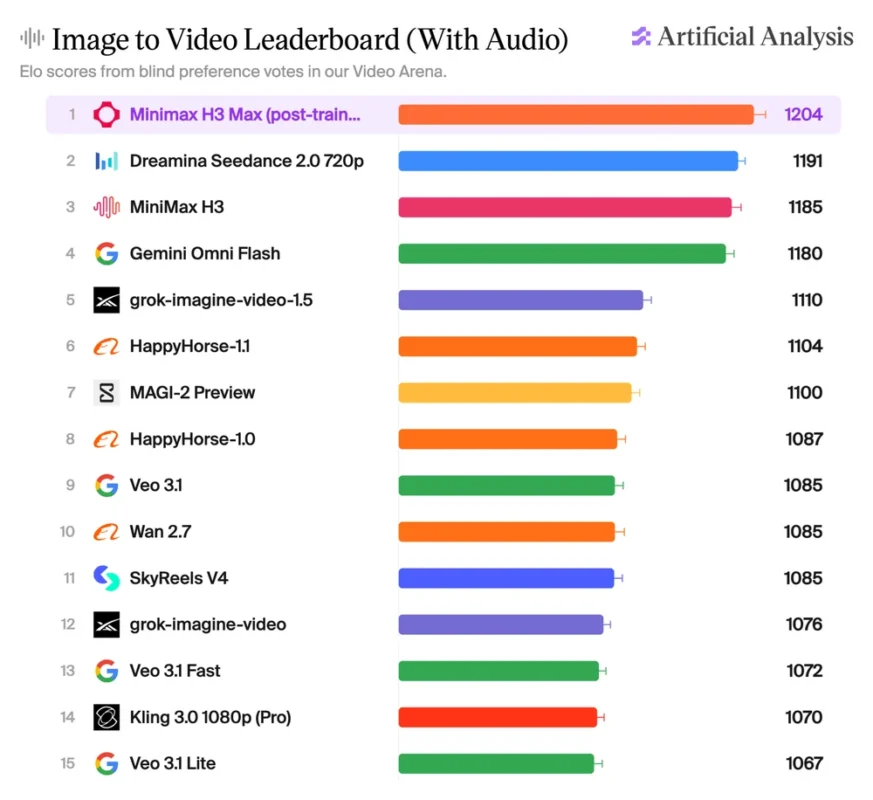
H3 Max is fal Research’s own Minimax H3 fine-tune, and it is absurdly fast — a 5-second 768p clip finishes in under 3 seconds while ranking first in fal’s internal quality, prompt-adherence, and aesthetics evaluations. The catch: it currently sits behind a paid API. Taking an open-source model, optimizing it a bit, and putting it behind a paywall is a choice — the fal team says they will open-source the weights eventually, and I genuinely hope they stick to their word.
References: fal Launch Blog · fal API Docs
Evoke — A Steerable, Endless Interactive World Model
Evoke is Alaya Lab’s interactive world model, and “steerable Genie 3 for everyone” is the honest one-line summary. You give it an image plus joystick movements, and it outputs video that responds almost instantly. Drive a snowmobile, trigger a volcano eruption, or type “add balloons” and balloons appear. It understands scenarios from kayaking to scuba diving, and sessions can run for hours.
What it is: a 14B-parameter, CFG-free, three-step world model that generates 384×640 @ 24 fps video using an external persistent memory bank indexed by camera pose. Why it matters: it is fully open-source under Apache 2.0 with weights for every training stage, and the final model is about 57 GB — big, but runnable on a single high-end GPU. My favorite application is not entertainment: create simulated videos of robots operating in hospitals, care centers, or rescue scenarios, and use that synthetic data to train real robots. That is genuinely useful.
References: Project Page · Hugging Face Weights · GitHub Repository
Evoke turns a joystick into a world builder — open-source, steerable, and hour-long.
Bernini v2 — ByteDance’s Latent Semantic Planning
Bernini v2 is ByteDance’s unified framework for video generation and editing, and it works by splitting the job in two: an MLLM-based semantic planner predicts what the scene should become, and a DiT-based renderer draws it. Version 2 adds reference-image insertion, camera perspective changes, object removal, and tone shifts.
What it is: a 180 GB omni-modal video editor (before the VAE and text encoders). Why it matters: the latent semantic planning approach is genuinely clever, but let us be honest about the size — good luck running this locally on anything you own. Since Minimax H3 already does reference-to-video, v2 may land a bit dead on arrival for most people. Watch the architecture, skip the download, at least until someone quantizes it.
References: arXiv Paper Page · Hugging Face Weights
Qwen-Video-Edit — Repurposing Image Editors for Video
Qwen-Video-Edit is exactly what the name says, with a twist: it is not a new model at all. The researchers took Qwen-Image-Edit — an existing image editor — and ran it frame by frame through Alibaba’s Wan video workflow. The result: natural-language video editing with no new video model required.
So what this means for you: it is a neat research demonstration, but Minimax H3 already edits existing videos natively, so the practical value is limited. The interesting idea — repurposing tools instead of training new ones — is worth stealing for your own pipelines.
References: Project Page · GitHub Repository · Hugging Face Weights
3D Generation & Spatial AI
Five distinct 3D pipelines shipped in a single month, each solving a different bottleneck in going from text, image, or video to a simulation-ready 3D world. We are finally moving past the “floaty, disconnected mesh” era of AI 3D generation into physics-aware, temporally consistent scene reconstruction.
Block3D — Text-to-3D in 5 Seconds
Block3D is a text-to-3D generator that trades a bit of polish for a lot of speed, and that is a fair trade for prototyping. It breaks a 3D object into blocks of shape tokens, generates the blocks one after another, but denoises all tokens within each block in parallel using diffusion — over 5× faster than standard autoregressive methods, averaging about 5 seconds per model. Not the most detailed output you will ever see, but it is among the fastest 3D generators available, and the code plus the training recipe are already on GitHub.
References: Project Page · arXiv Paper
OVOW (One Video, One World) — Monocular Video to Physical 4D Scenes
OVOW turns a normal handheld video into an animated 3D world with individual, simulation-ready objects. Feed it a clip of your living room, and it reconstructs each object as its own separate 3D mesh, figures out how the objects move through space, and works out how close they are to each other — basically turning your phone video into a scene you can drop into a physics engine.
How it works is a great lesson in modern AI engineering: it chains Qwen 3-VL for scene understanding, SAM 3 for segmentation, Flux 2 for inpainting the hidden parts of objects, and Hi3DGen for 3D reconstruction, plus pose estimation models. Everything is released — the code is MIT licensed, though note the upstream models carry non-commercial licenses. You will want 40+ GB of VRAM, so this one is for the serious GPU crowd.
References: Project Page · GitHub Repository · arXiv Paper
FixAnything — A Single Video Model Repairs Any 3D Render
FixAnything is a cleanup system for broken or ugly 3D renders, and if you have ever looked at a Gaussian splat from a weird angle and watched the world dissolve into floating artifacts, you already know the pain. Reconstructions look fine from familiar camera angles, then fall apart elsewhere — holes, floaters, blur.
What it does: it takes the degraded render and uses a pre-trained video model (Stable Diffusion 2.1) to produce a cleaner, more realistic scene while preserving the camera path and overall 3D structure. It works on meshes, sparse point clouds, and aerial views, and runs on most consumer GPUs. Presented at ECCV 2026, code already released. It is the kind of unglamorous tool that quietly makes every 3D pipeline around it better.
References: Project Page · arXiv Paper
GeoWeaver — Long-Sequence 3D Reconstruction Without Drift
GeoWeaver solves the drift problem — the reason long 3D reconstructions slowly fall apart. Reconstructing a scene from a few frames is manageable, but over a long video the AI gradually loses track of scale and camera position, and the world drifts apart like a badly stitched panorama.
The fix: break the long video into manageable chunks, predict depth and camera position per chunk, then during inference gradually stitch the chunks together using nearby frames, overlapping views, and long-range matches until the entire sequence agrees on one consistent world. It posts the lowest average error rate across its benchmarks versus prior methods. Currently it is a paper only (no code yet), but if you build anything in spatial computing or robotics, this one belongs in your reading list.
References: Project Page · arXiv Paper
4DAnyone — Create Anyone in 4D from a Casual Monocular Video
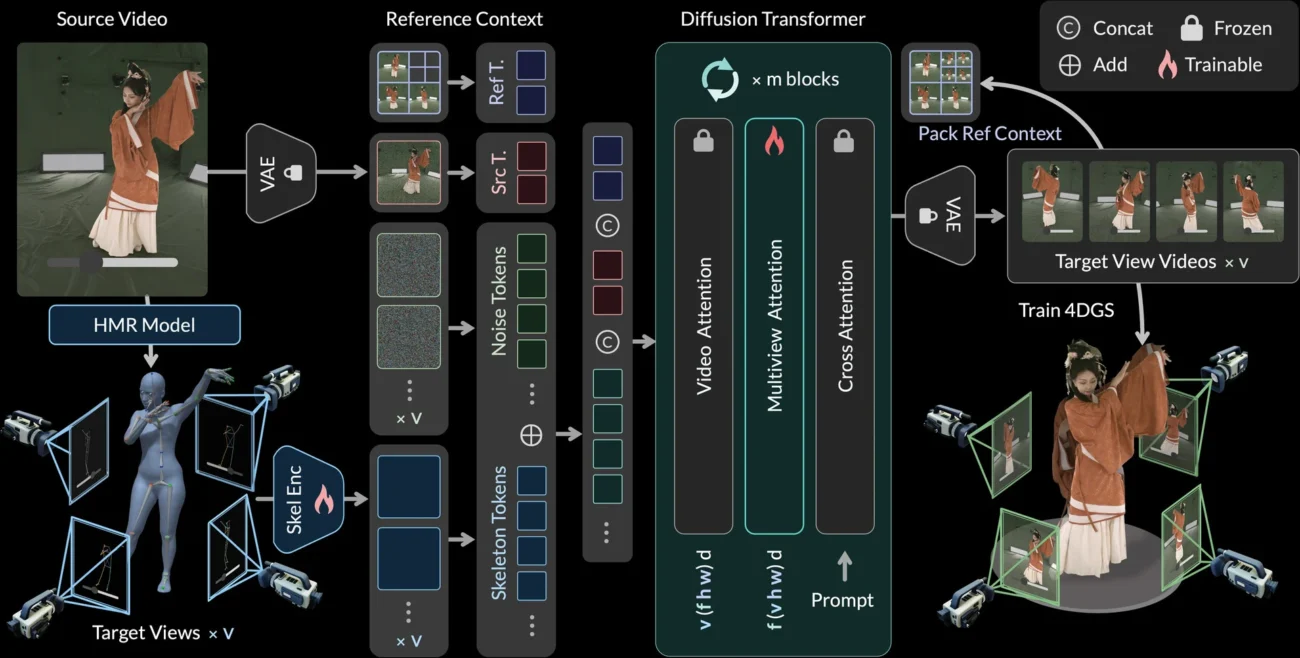
4DAnyone turns a single casual video of a person moving into a 4D Gaussian splat — essentially a moving 3D model you can view from any angle. Film your friend dancing with a phone, and you get a free-viewpoint 4D reconstruction, no mocap suit required.
How it works: it extracts a 3D skeleton from the source video, uses that skeleton to guide generation of many new camera views, and reconstructs everything into a 4D Gaussian splatting model. Accepted at SIGGRAPH Asia 2026, and against prior tools like Recam Master it is visibly more detailed and consistent — currently the state of the art for 4D character generation. The model is only 12 GB, so it fits on most mid-to-high-end GPUs.
References: Project Page · GitHub Repository · Hugging Face Weights
Image, Audio & Creative Synthesis
The creative synthesis layer shipped five distinct breakthroughs this month, moving from “impressive demo” to “usable pipeline.” We are seeing native 4K generation without VAE decoders, JSON-native image control, zero-shot voice cloning in packages small enough to run on a smartphone, and AI music generators backed by major record labels.
SenseNova U1.5-8B — Native 4K Without a VAE
SenseNova U1.5-8B is SenseTime’s new open-source image generator and editor, and the technical headline is that it skips the VAE entirely. Normally, image generators work in a compressed “latent space” and then need a decoder (the VAE) to convert back into pixels you can actually see. SenseNova generates end-to-end in pixel space — no encoders, no decoders — and still produces native 4K output.
In practice it generates highly realistic photos, handles dense posters and infographics without choking, edits images with natural language like Nano Banana and GPT Image, takes multiple reference inputs, and even follows instructions scribbled directly on the image. At roughly 50 GB and Apache 2.0 licensed, it is a serious option for anyone with a high-end GPU and an allergy to API fees.

References: arXiv Paper · GitHub Repository
DiffusionOPSD — On-Policy Self-Distillation for Diffusion
DiffusionOPSD is ByteDance’s new training method for image models, and it fixes a problem you have probably felt without naming it: why do image generators take “bicycle kick” and generate an actual bicycle?
The problem it solves: when you train an image generator with a reward model, the reward only judges the final image. The generator then has to guess which of its many intermediate steps caused the problem — a vague signal, and not very helpful. OPSD turns that final reward into direct instructions about which intermediate steps to fix. It creates a nearby positive target and a negative target, then trains the model toward the better one and away from the worse one. The results: 44% better quality than the previous strongest competitor, 40% fewer training hours on SD 3.5, and 63% fewer on SDXL Turbo. It is model-agnostic, and the code is on GitHub.
References: Project Page · GitHub Repository · Hugging Face Weights
Fibo 1.5 — JSON-Native Image Generation
Fibo 1.5 by Bria AI is an open-source image generator with an unusual trick: it accepts structured JSON prompts. Instead of one long text prompt, you can specify separate fields for description, location, relative size, shape, color, and texture, and the model follows all of them. Regular text prompts work too, and you can edit existing images with natural language — add a blanket, then some books, then a cat, iterating step by step.
Honestly, not the best quality generator out there — my current favorite is still Krea 2 — but if you need structured, controllable generation for product work, the JSON interface is genuinely useful.
References: Hugging Face Weights
Audio8 TTS 0.1B — Zero-Shot Voice Cloning in 1.7 GB
Audio8-TTS-Preview-0.1b is a tiny text-to-speech model with a big talent: zero-shot voice cloning. Give it a few seconds of someone’s voice and any text, and it reads the text in that voice — multilingual, across English, Mandarin, and more. The entire package is just 1.7 GB including the neural audio codec, so it fits on most consumer devices, including an ONNX INT8 CPU setup. If you have been eyeing ElevenLabs’ pricing page and quietly closing the tab, start here.
References: Hugging Face Weights
Happy Shrimp — Alibaba’s AI Music Generator
Happy Shrimp is a new music generator from Alibaba ATH (the same lab behind Happy Horse), and it sounds remarkably clean and dynamic. Describe the style, optionally paste lyrics or toggle instrumental mode, and it produces a fully produced song. At the time of writing it is free to use, which makes it worth a spin even if you are just curious. Probably the best music generator you can try today without paying anything.
References: Happy Shrimp Official Site
Gemini 3.5 Transcribe & Omni 1.1 Flash
Two smaller but useful Google releases. Gemini 3.5 Transcribe turns audio into text with two modes — verbatim (everything exactly as spoken) and smart (errors removed, filler words cut, text formatted). It detects multiple speakers, adds word-level timestamps, handles multilingual speech mid-sentence, and runs a live streaming version with sub-second latency. It is already in the Gemini Mac app, Rambler on Android, and coming to Chrome.
Gemini Omni 1.1 Flash is a modest-but-practical video model upgrade: it can extend a video while looking back at up to 10 seconds of previous footage (not just the last frame), generate motion between a first and last frame, and produce cheap 360p drafts up to 60× faster before upscaling to 1080p or 4K. Try it in Google AI Studio.
So what this means for you: sub-second transcription plus voice commands means you can start driving your agents by voice instead of typing — useful for anyone whose chai gets cold while they type prompts.
References: Transcribe Launch Blog · Omni 1.1 Flash Blog
Agentic Systems & Harnesses
The most strategically important releases this month were not new models, but new harnesses. We are learning that wrapping a mid-tier model in a brilliant agentic architecture can yield better results than upgrading to a frontier model, fundamentally changing how we build AI software.
Code World Model — Coding Agent as World Brain
Code World Model is an attempt to build AI-generated worlds that actually remember what is happening. Most video world models only predict what the next frame should look like — impressive, sure, but they do not maintain the underlying rules, objects, or consequences of the world. This project separates the two jobs.
Think of it like a video game where the engine is written by a coding agent and a video generator handles the graphics. A coding agent acts as the brain: when something happens, it reasons about the event, writes code, and updates a persistent world state. That state becomes a simplified proxy describing where objects are and how the scene is laid out, and a fine-tuned Minimax H3 renders video from it. The demos show long-running worlds that change visual styles while preserving the scene, with a minimap tracking every object. If we ever want AI-powered games or interactive worlds, this architecture is the necessary step — a video generator alone cannot keep the world consistent. Code is on GitHub, tested on an H800 (80 GB), though a quantized Minimax should work on smaller hardware.
References: Project Page · GitHub Repository · arXiv Paper Page
VoiceMem — Sub-Second Dual-Brain Memory for Voice Agents
VoiceMem is a memory system designed specifically for voice agents, and it solves the awkward problem of your AI assistant forgetting you every single conversation. The system splits memory into two parts: the left brain stores factual information (people, entities, knowledge), while the right brain tracks preferences, personality, and emotions.
The efficiency is the clever part. Instead of stuffing thousands of old conversations back into the model every turn — which blows past the ~1,300 ms latency budget that makes voice feel natural — VoiceMem searches its memory graph and fetches only the few memories that matter. The result: better memory accuracy than competitor methods, vastly fewer tokens, and sub-second latency. In the demo it recalled a user’s April midterm grade and how it affected them — the kind of detail that makes an assistant feel like a companion rather than a vending machine. Code and datasets are released.
References: Project Page · Hugging Face Dataset
Comfy MCP — Open-Sourcing the Agentic Connector
Comfy MCP is ComfyUI’s open-sourced agentic connector, and if you have ever spent twenty minutes dragging nodes and noodles around a ComfyUI canvas for a workflow you have built ten times before, this is your liberation. It is an MCP (Model Context Protocol) bridge that connects an AI agent directly to your local ComfyUI installation, with full awareness of your GPU, installed models, and custom nodes.
So what this means for you: tell GPT on Codex or GLM on ZCode “generate a video with Minimax H3” in plain language, and it spins up the workflow automatically. One pip install. Node dragging is now optional.
References: Comfy Blog Post
NVIDIA AVO — 100% on ARC-AGI-3 with Claude Opus 5
AVO is NVIDIA’s agentic harness that lifted Claude Opus 5 from a 30% baseline to a perfect 100% on ARC-AGI-3, completing all 183 levels across all 25 environments. If you are new to ARC-AGI-3: it drops AI models into novel video-game-like environments with zero instructions. They must figure out the rules and goals by themselves through trial and error — which tests not game-playing skill, but the emergent ability to learn and apply new patterns on the fly. Humans solve these easily; most frontier models score under 10%.
The caveat: NVIDIA evaluated on the public dataset, so the score may be somewhat inflated. The lesson still stands — you do not always have to optimize the model. Sometimes optimizing the harness around it unlocks more intelligence for free.
References: NVIDIA Developer Blog
Planetary Intelligence & Benchmarks
AI is moving beyond the screen and into the physical planet. Google Research’s Planetary Prediction Engine automates global geospatial modeling workflows, while Google DeepMind’s Orbit++ provides a torture test for 3D vision systems.
Planetary Prediction Engine — Automating Earth AI
The Planetary Prediction Engine (PPE) is essentially an AI data scientist for problems involving Earth. Give it a question in natural language — “predict disease risk” or “identify areas facing food shortages” — and it automatically finds relevant geographic data, cleans and combines it, trains machine learning models, and evaluates them. Normally specialized teams spend weeks doing this manually, plus you need deep technical expertise to pull it off. Google says PPE reduces all of that to minutes.
The results back it up: for food-security mapping in Nigeria, accuracy improved from 31% to 66% — more than doubling the baseline. For predicting the DRC Ebola outbreak, it scored 88%, over a 10% better than the previous state-of-the-art. A fascinating project that combines AI agents with Google Earth data, and one of the most genuinely useful things Google has released this year.
References: Google Research Blog · arXiv Paper
Orbit++ — A Torture Test for 3D Vision Systems
Orbit++ is a new torture test for AI systems that try to understand how a camera moves through the real world — a critical capability for 3D reconstruction, robotics, and computer vision. It starts with real 360° videos from the internet, figures out camera motion using the full panoramic view, then crops out much harder normal-perspective videos designed to break things.
Feed those clips to existing systems like CoMap or MegaSAM and many of them fail — which is exactly the point. If you are building 3D reconstruction models and want to properly stress-test them, this is a fascinating new way to do it. Code and benchmark are on GitHub from Google DeepMind.
References: Project Page · GitHub Repository · arXiv Paper
The Robotics Revolution
August 2026 marked the moment humanoid robots officially outperformed humans on multiple athletic benchmarks. If you thought last year’s robot games were a clumsy, bloopers-reel mess, you need to see what happened in Beijing. The speed of improvement, especially from Chinese labs, is absolutely terrifying and exhilarating at the same time.
2026 World Humanoid Robot Games — Records Broken
The 2026 World Humanoid Robot Games ran in Beijing from August 22–26 with 51 events, and the year-over-year improvement is the story. Last year: clunky robots, slow motion, bloopers galore. This year: human world records falling.
The headline results: the Tiangong Ultra took gold in the standing high jump at 4.8 m (the human record is 3.73 m), cleared 2.88 m in the high jump (beating Sotomayor’s 2.45 m), and hit 7.9 m in the long jump. The Tiangong robot ran the 100 m in 9.39 seconds. The cutest clip of the week: the Tiangong Omni running the 400 m like a shy anime girl — arms tucked close to its torso, leaning forward. It looks embarrassing, but reinforcement learning discovered this posture is actually a speed hack, and it won the race. Maybe we have been running wrong our whole lives. There was also the Mini Pie bot trying its very best at long jump (no record, full marks for cuteness), humanoid soccer (slow, chaotic, full of collisions, still fun), autonomous ping pong by AGI Bot A3, tug-of-war with real-time force adjustment, kung fu routines, breakdancing, and the 100 m obstacle race won by the AGI Bot X2.
References: Wikipedia Entry · Official Event Page
Unitree “Superman” — Faster Than Usain Bolt
Unitree’s “Superman” is a high-dynamic humanoid demonstrator that can already outrun the fastest human sprinter in the world. It does a standing high jump of about 2 m (the human record is 1.8 m) and reaches a top speed of almost 12.7 m/s — edging past Usain Bolt’s peak sprint speed of 12.4 m/s. The whole machine has been in development for a little over three months.
The funny part: they designed it to run so fast that it cannot really stop. Sprint demos show it struggling to slow down and eventually crashing into walls and barriers just to halt. A genuinely effective braking system, it turns out, is the next engineering milestone. Honor’s Lightning robot and the Tiangong also posted warm-up sprints that completely outrun humans — this is not a one-off stunt.
Tennis Robots — Adapt and Galbot
Humanoid robots are now playing tennis, and if you have ever played, you know how hard this actually is. It is not just hitting the ball — you need the right force, top spin or backspin, and split-second decisions. The Adapt system transfers real human match data onto Unitree G1 robots, which rally and serve autonomously. Even more impressive: Galbot, shown playing fully autonomous tennis at the Beijing games, running toward the ball and deciding force and spin in a fraction of a second.
MX01 Transformer Robot & Qiji Cyber Horse
Two machines from the World Robot Conference that prove robotics has entered its entertainment era. Arc Shell Robotics (a Chinese startup founded in July 2026) unveiled the MX01 — a real-life transformer that switches between four forms: bipedal humanoid, quadruped, flying drone attachment, and (coming soon) wheeled. Cute and clever, though more forms means more failure points, and the practical trade-off is unproven.
Then there is the Qiji from DAX AI: a quadruped cyber horse built for rough terrain that you can actually climb on and ride. 300 kg payload, 40 km range, top speed around 10 km/h over steep slopes, gravel, mud, snow, and ice — while a wheeled XS version cruises up to 40 km/h. The X1 costs about $40,000 (roughly ₹33 lakh — about the price of a decent hatchback), and the wheeled XS around $53,000. A robot horse that costs less than entry-level luxury car money is, somehow, the least surprising sentence in this entire article.
Bionic Humanoids — Annie Wit, Ubtech, and Elf Schwan 2.0
The World Robot Conference also delivered its annual showcase of hyper-realistic bionic humanoids, and the realism bar keeps rising. Annie Wit sang with synced lips and body movement, but the uncanny crown goes to Ubtech — its full-body variants blink, look around, and move their heads so naturally that “extremely lifelike” is the only honest description. Aheadform’s Elf Schwan 2.0 brought pointed elf ears with ornate floral accessories and, for the first time, a newly articulated body with expanded degrees of freedom — previously their demos were head-and-shoulders only. For subtle expressions and conversational realism, Aheadform currently leads the field.
PaXini PXCap Pro — Next-Gen Data Collection Glove
The PXCap Pro from PaXini Technology is built for one clear job: collecting high-quality hand data that robots can actually learn from. Wear the lightweight glove and it captures everything your hand does — tactile sensors over fingertips and palm feel forces down to 0.1 Newtons, a wide-angle wrist camera records the full scene, and precision angular encoders track joint angles even under magnetic interference. If you want a robot to automate a dexterous task, you or your employees just wear the glove while doing it: tying ribbons, working with balloons, packing boxes, lab work. It is the unglamorous infrastructure that makes all the flashy robot demos possible.
Gen 1.5 and S1 — One-Shot Robotics Foundation Models
Two robotics foundation models this month demonstrated one-shot learning — and this is the concept that matters most for the future of household robots. Normally, teaching a robot a completely new task means collecting hours of demonstrations and fine-tuning the model. With one-shot learning, you show the robot one video demonstration and it attempts the task without any additional training.
Gen 1.5 (from Generalist AI) showed 59% success across 10 diverse tasks from a single 3–12 second demonstration, rising to 83% with about 5 minutes of additional data per task. S1 demonstrated completely new tasks — repotting a plant, pour-over coffee, kit assembly, flipping a pancake — some lasting up to 10 minutes with dozens of individual actions. The success rates are not perfect yet, but consider the implication: eventually you will show your household robot a task once, and it will just figure it out. We are watching that future get built in real time.
References: Generalist AI Gen 1.5 Blog
Local AI Hardware & Open-Source Voice
The dream of running massive frontier models locally without a server rack is finally materializing into consumer-grade desktop prototypes, while the open-source voice ecosystem is finally catching up to commercial offerings.
Xiaomi AI Cube — Three Chips, 200B Local Models
The AI Cube is Xiaomi’s tiny desktop computer — similar to the NVIDIA DGX Spark in concept — designed to run huge AI models completely locally. No cloud servers, no subscriptions, no dependence on your internet connection (or your ISP’s mercy during peak hours). A 100+ billion parameter model just sits on your desk, fully offline, fully private.
The hardware: three of Xiaomi’s XRING chips. The O3 is the main processor (10-core CPU, 16-core GPU, neural processor). The O100 moves data extremely fast for AI with up to 1.22 TB/s memory bandwidth. The D100 is Xiaomi’s dedicated AI chip. Together they run a 120B-parameter model and a smaller 3B model simultaneously — switch between quick responses and heavy reasoning as needed. The prototype has 80 GB of unified memory, expandable to 160 GB, enough for models up to 200B parameters. I genuinely think devices like this are the future: instead of an ugly GPU rack, a small box on your desk. No price or release date yet — rumors say sometime next year.
VoiceStudio — The Open-Source ElevenLabs Alternative Trending on GitHub
VoiceStudio hit GitHub trending in late August 2026 as “the open-source, fully-local ElevenLabs alternative” — voice cloning, voice design, video dubbing, dictation, transcription, and audiobook creation, all on your own hardware, with no API keys and no cloud.7 Alongside Audio8 TTS and the established Kokoro and Chatterbox models, the open-source voice stack is now a credible alternative for anyone who needs privacy, offline capability, or simply prefers not to rent their own voice back from a subscription.
References: GitHub Repository
nanochat — Karpathy’s $100 ChatGPT Clone Hits 57.7K Stars
Andrej Karpathy’s nanochat keeps climbing — now at 57.7K GitHub stars, billed as “the best ChatGPT that $100 can buy.” It provides a complete ChatGPT-style LLM — training, inference, and a web UI — trainable for about $100 of compute (roughly ₹8,300, less than a mid-range phone’s screen protector budget over its lifetime). One of the most-watched repos of 2026, precisely because it proves frontier-class chat is achievable on consumer hardware with a disciplined codebase.10
References: GitHub Repository · Star History
Industry Shifts — Meta’s $17B Settlement & GPT-5.6 Price War
Beyond the model releases, two macro shifts are reshaping the AI landscape: Meta’s record $17 billion child-safety settlement and OpenAI’s aggressive GPT-5.6 Sol price cut.
Meta’s $17B Child-Safety Settlement
Meta agreed to pay up to $17 billion over 10 years to settle claims brought by a bipartisan coalition of 52 state attorneys general over harm to teens — the biggest tech payout in history, roughly three times what it paid to acquihire a single 28-year-old AI superstar.6 The settlement includes platform-level safety changes: daily use limits and notification restrictions for teen users. Critics like the EFF call it a bad deal that does not go far enough structurally, and they have fair points. Either way, the payout sets a new floor for platform accountability in the AI era, and every platform shipping AI features to minors should be reading the fine print.
References: Fortune Coverage · EFF Analysis
OpenAI GPT-5.6 Sol Price Cut — 20%+ Off Through November
OpenAI quietly lowered the price of its flagship GPT-5.6 Sol by more than 20% on August 21, 2026 — the second price reduction in a month. Sol now costs $4 per million input tokens (down from $5) and $20 per million output tokens (down from $30), with promotional pricing running through at least November 21, 2026.5 Combined with earlier 80% cuts to GPT-5.6 Luna and 20% cuts to GPT-5.6 Terra, the pattern is clear: OpenAI is responding to the open-weight flood from Chinese labs — GLM 5.3 Flash at ₹4 per task, Qwen 3.8 Flash Next at ₹8 — with aggressive frontier-tier price competition.
So what this means for you: the price war is real, and consumers win. Lock in your model choices now, and recheck pricing quarterly — this market is repricing faster than any of us can keep up with.
References: OpenAI GPT-5.6 Page · OpenAI Community Post
Adopt now
- GLM 5.3 Flash for frontier vision at ₹4 per task
- FastH3 V1 for real-time local video generation
- Comfy MCP to drive your ComfyUI install from an agent
- VoiceMem for persistent memory in voice assistants
- VoiceStudio as a local ElevenLabs alternative
Watch and wait
- H3 Max until weights are open-sourced
- Xiaomi AI Cube until pricing and release date confirmed
- Bernini v2 until VRAM requirements drop
- World Labs Atlas until early access opens widely
- MX01 transformer robot until practical deployments land
August/September 2026 AI Roundup FAQ
The most common questions about this month’s AI releases concern the identity of the stealth “Ox Alpha” model, whether Anthropic’s new Claude Fable 5.1 is really the new benchmark leader, what World Labs Atlas actually does, whether robots really outran Usain Bolt, and whether FastH3 is faster than real time. Here are the direct answers to what the community is asking right now. If you are looking for other latest AI news from September 2026 then definitely read these blogs – AI news till 13th September 2026, AI News till 18th September 2026
What is the “Ox Alpha” stealth model?
Ox Alpha was the mysterious codename of a model that had been topping the OpenRouter leaderboards for weeks before being officially revealed on 26 August 2026 as Z.AI’s GLM 5.3 Flash. It has 320B total parameters with 18B active, native vision, and is priced at $0.045 per task.
Is Claude Fable 5.1 really the new benchmark leader?
Yes — BenchLM ranks Claude Fable 5.1 at 83 as of September 2026, ahead of Claude Fable 5 (82.6) and Claude Opus 5. Launched September 1 with $10/M input pricing, it includes invisible anti-distillation safeguards and can be used to discover (but not develop) software vulnerabilities.
What is World Labs Atlas?
Atlas, unveiled September 1, 2026 by Fei-Fei Li’s World Labs, is described as the world’s first multimodal omni world model for spatial intelligence. It generates image and video frames with pixel-perfect camera control and persistent spatial coherence, positioning itself between renderer and simulator.
Did robots really outrun Usain Bolt in Beijing?
Unitree’s “Superman” humanoid demonstrator reached a top sprint speed of 12.7 m/s, which edges past Usain Bolt’s peak sprint speed of 12.4 m/s. However, the 100 m race itself was won by the Tiangong robot in roughly 9.39 s — still slower than Bolt’s 9.58 s world record, but a massive improvement on prior humanoid sprint times.
Is FastH3 really faster than real time?
Yes, on Blackwell (GB200 NVL72) hardware. Hao AI Lab’s FastVideo FastH3 V1 generates a 15-second video clip in under 30 seconds of wall time, which is faster than the duration of the video itself. On consumer hardware and Apple Silicon the speedup is smaller but still substantial.
What does “one-shot robotics learning” actually mean?
Foundation models like Gen 1.5 and S1 can watch a single human demonstration of a completely novel task (one they have never been trained on) and then attempt to replicate it. Gen 1.5 shows ~59% success across 10 diverse tasks from a single demo, rising to ~83% with ~5 minutes of additional data per task.
Is Qwen 3.8 Flash Next actually Qwen 4?
No — Alibaba explicitly frames Qwen 3.8 Flash Next as an early preview of the architecture that will ship in Qwen 4. It is a 125B-parameter MoE model with 6B active, featuring gated delta net, Qwen sparse attention, and 51B engram embeddings. It is open-weights and API-available today.
Can I run Evoke locally?
Yes — Alaya Lab released Evoke under the Apache 2.0 license with weights for every training stage. The final model is roughly 57 GB, so a high-end GPU is required. It generates 384×640 @ 24 fps interactive video in just three steps and can run hour-long steerable sessions with persistent memory.
What is VoiceStudio and why is it trending?
VoiceStudio is an open-source, fully-local ElevenLabs alternative trending on GitHub as of September 2026. It offers voice cloning, voice design, video dubbing, dictation, transcription, and audiobook creation entirely on your own hardware with no API keys or cloud dependencies.
Why did Meta pay $17 billion?
Meta agreed to pay up to $17 billion over 10 years to settle claims from 52 state attorneys general over harm to teens — the biggest tech payout in history. The settlement includes platform-level safety changes like daily use limits and notification restrictions for teen users.
Final Verdict — Where to Focus Next
If you run only five experiments from the August–September 2026 release wave, run them on GLM 5.3 Flash (for frontier vision at ₹4 per task), FastH3 V1 (for real-time local video generation), Evoke (for interactive world generation), NVIDIA AVO’s harness pattern (to lift any mid-tier model past its baseline), and Claude Fable 5.1 (for coding and knowledge work with anti-distillation safeguards). The structural lesson of this month is that harnesses, memory architectures, and training methods now matter more than raw parameter count, and that the cost of frontier-class reasoning has collapsed below ₹8 per task for open-weight models while closed frontier labs race to match it on price.
For teams shipping agents in production, the Code World Model paradigm — a coding agent maintaining persistent world state while a video generator handles graphics — is the most durable architectural pattern of the month, and World Labs Atlas looks set to accelerate that pattern into Q4. For creative workflows, DiffusionOPSD and SenseNova U1.5 both move the needle from “impressive demo” to “usable pipeline.” For anyone in robotics or embodied AI, the PaXini PXCap Pro data-collection glove and the one-shot learning demonstrations from Gen 1.5 and S1 are the releases that have moved the furthest from paper toward deployment.
The honest watch-list for October: whether fal actually open-sources H3 Max weights, whether the harness patterns from AVO get absorbed into LangGraph and major agent SDKs as first-class primitives, whether World Labs Atlas early access opens broadly, and whether the Xiaomi AI Cube ships at a consumer price. If those four things land as advertised, Q4 2026 will be the quarter the industry consolidates around the new architecture consensus. Until then, keep your chai warm and your RSS feeds warmer — this train is not slowing down.
Sources and Further Reading
- AI News Weekly, August/September 2026 AI news roundup transcript, August–September 2026. ↩
- Z.AI, “GLM-5.3-Flash: Frontier Intelligence, Flash Cost”, official launch blog, 26 August 2026. ↩
- Anthropic, “Introducing Claude Fable 5.1 and Claude Mythos 5.1”, 1 September 2026. ↩
- World Labs, “Atlas: A World Model for Spatial Intelligence”, 1 September 2026. ↩
- OpenAI, “GPT-5.6: Frontier intelligence that scales with your ambition”, price cut update August 21, 2026. ↩
- Fortune, “Meta’s $17 billion child-safety settlement is the biggest tech payout ever”, 26 August 2026. ↩
- GitHub, VoiceStudio — open-source fully-local ElevenLabs alternative, trending September 2026. ↩
- EnterpriseDNA, “GLM-5.3 and GLM-5.3-Flash lead Hugging Face’s trending list”, 2 September 2026. ↩
- Google DeepMind, Models page listing Gemini 3.8 Flash and 3.8 Flash Cyber, September 2026. ↩
- Star History, karpathy/nanochat — 57.7k stars, August 2026. ↩
- Hugging Face, zai-org/GLM-5.3-Flash weights, 2026.
- Alibaba Qwen, “Qwen 3.8-Flash-Next Specs, Benchmarks, and the Qwen 4 Preview”, 2026.
- Tencent, tencent/Hy4-preview weights, August 2026.
- Hao AI Lab @ UCSD, “FastVideo FastH3 V1: Open-Weight 4-Step Sparse Distilled Minimax H3”, 27 August 2026.
- Alaya Lab, “Alaya-EVOKE: From Linear-Scaling Supervision to Endless World”, arXiv 2608.13546, August 2026.
- Chen, Y. et al., “Code World Model: Coding Agent as World Brain”, arXiv 2608.25927, August 2026.
- Xie, Z. et al., “VoiceMem: Streaming Dual-Brain Memory for Real-Time Interaction”, arXiv 2608.26005, August 2026.
- Comfy.org, “Open Sourcing Comfy MCP on Local”, 18 August 2026.
- NVIDIA, “NVIDIA AVO Reaches 100% on ARC-AGI-3”, developer blog, 21 August 2026.
- Google Research, “Planetary Prediction Engine: Automating Global Models via Earth AI”, August 2026.
- Wikipedia, “World Humanoid Robot Games”, 2026.
- Ornith AI, “Ornith-1.5: From Self-Scaffolding to Self-Improvement”, August 2026.
- Generalist AI, “Gen 1.5: Embodied Foundation Models are One-Shot Learners”, August 2026.
- EFF, “Meta’s $17 Billion Settlement is a Bad Deal for Teens”, September 2026.
- OpenAI Community, “20% price reduction for GPT 5.6 Sol”, 21 August 2026.
- Hacker News, “Atlas: A World Model for Spatial Intelligence” discussion, September 2026.
Last updated: 3 September 2026. All releases verified against public GitHub repositories, peer-reviewed arXiv papers, official vendor announcements, and the source video transcript. Pricing, availability, and benchmark figures are subject to change — verify current details on the source pages before making production decisions.